

Why Do Keys Break in the First Place?
Think of a key like a paperclip you bend back and forth. Once, twice, it snaps right back. Do it a thousand times over four years of pocket-and-lock use, and eventually it just doesn't. The metal thins, the cuts round off, and one ordinary Tuesday morning it goes.
A few things speed that up. Winter's a big one; brittle metal snaps easier than warm, flexible metal, which is why we see more of these calls in January than July. A sticky or worn cylinder is another: if you've been muscling a stubborn deadbolt for months, that extra torque wears the key down faster than it wears the lock. And a lower-quality hardware-store duplicate was never as strong as the original cut to begin with, so it's working with a head start on failure.
None of that means you did anything wrong, by the way. A key that's been on your ring for three or four years is simply closer to the end of its life than a new one, no matter how gently you've treated it.
Is It Safe to Remove a Broken Key Yourself?
Sometimes. Not always, and not if you're guessing. Check off all three of these before you try:
- Part of the key is still visible above the lock face
- The lock is a standard residential door or padlock, not a vehicle ignition
- The fragment shows no real resistance after two or three gentle attempts
Grab lubricant before you grab pliers. WD-40 or powdered graphite loosens things up inside the lock and gives the fragment a real shot at sliding free. Got a bit sticking out? Needle-nose pliers or tweezers, straight pull, no twisting.
Missing even one item on that checklist? Skip ahead to when to call someone. We're not saying that to drum up business. Every source we looked at draws this same line, because past that point, DIY tends to make the job worse, not better.
What's the One DIY Mistake That Makes a Broken Key Worse?
Super glue. It shows up again and again as a DIY suggestion for a broken key, and it's almost always well-intentioned: the idea is to glue a thin stick to the fragment and pull it out. This almost never works, and glue that seeps past the fragment can bond with the pin tumblers instead of coming out with it.
The second-most-common mistake is simpler: continuing to push or wiggle a fragment that isn't moving. Every extra attempt that meets resistance is a chance to shove the piece past the shear line or scratch up the pin chamber. At that point, what would have been a straightforward extraction can turn into a full lock replacement.
From a technician's perspective, the calls that turn into the longest, most involved jobs are almost never the ones where someone tried nothing. They're the ones where a fragment got pushed deeper by a well-meaning attempt with the wrong tool.
Is a Broken Key in the Ignition Different From a Door Lock?
An ignition break isn't just a smaller version of a door lock break. Modern ignition systems have electronic components that can be damaged by metal fragments or forced manipulation attempts, which is why automotive sources treat a broken key here as an automatic call-a-professional situation rather than a DIY judgment call.
The margin for error is a lot smaller than it is inside a door lock's pin tumblers. A mistake during a DIY attempt can mean a bigger repair than the broken key itself, which is the risk an automotive locksmith's tools and process are built to avoid.
If your key snapped off in the ignition rather than a door, this is the one scenario in this whole guide where the DIY checklist above simply doesn't apply. For everything else involved in a car lockout, our guide on locked keys in your car covers the wider range of situations that don't involve a snapped key.
If the key hasn't broken but simply won't turn in the ignition, check whether it's a worn key or a worn ignition cylinder before you force it. A stiff key that's forced can snap off in the lock.
When Should You Call a Locksmith for Broken Key Extraction?
Go back through that three-item checklist. Miss even one, and here's your answer, every time: fragment not visible? Call. Ignition, not a door? Call. Any resistance at all? Call. Fancy smart lock or high-security hardware? Yeah, call.
Timing works against a lot of people in this exact moment, and it's worth knowing why. An estimated 67% of locksmith calls happen outside traditional 9-to-5 business hours, with roughly 35% of all daily calls landing in the 6 PM to 11 PM window alone as people get home and find something isn't cooperating.
of locksmith calls happen outside 9-to-5 business hours
of daily calls land in the 6 PM to 11 PM window alone
Source: AgentZap, Locksmith Industry Phone Statistics, 2026
An emergency locksmith service exists for precisely this pattern. It's built around the fact that a broken key rarely waits for a convenient time. If you're weighing whether to keep working at a stuck fragment or make the call, that after-hours reality is worth factoring in.
Response in Wilmington and the Surrounding Area
Kwikey Locksmith is one local shop based in Wilmington, DE, running since 2009, and broken key extraction is a routine part of that work, right alongside the lockouts and rekeys covered in our guide to emergency lockouts in Delaware and nearby PA. Trolley Square rowhomes, Highlands single-family homes, Riverfront apartments and offices, the hardware differs by neighborhood, but the extraction process and the shop showing up doesn't. Our full rundown on response across Wilmington's neighborhoods covers that in more detail.
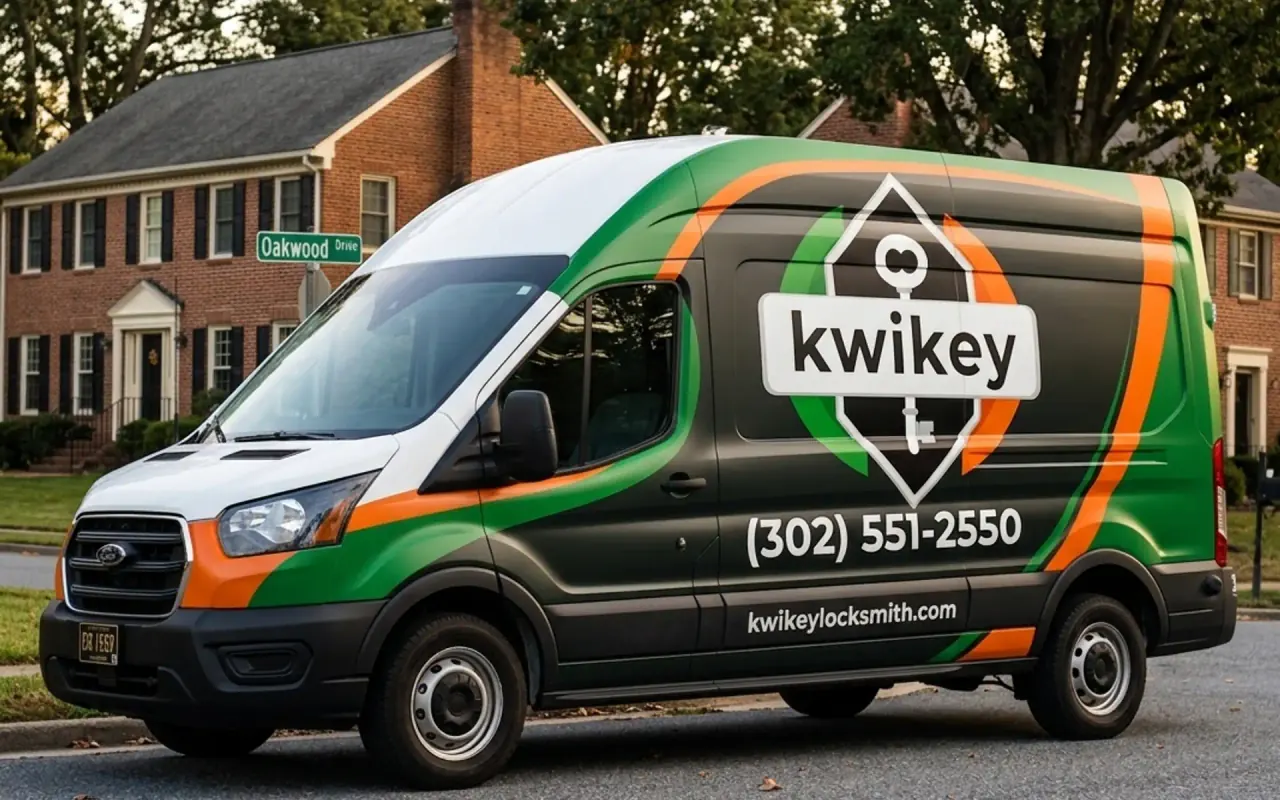
We're not going to promise you a number of minutes either. Real talk: we work on more than 15 lock brands, nobody but us shows up (no subcontractors), and every completed job carries a 90-day workmanship warranty on eligible work and installed hardware. Broken key at 9 PM on a Tuesday, same as a lockout at 2 in the afternoon. Our emergency service doesn't treat one as more urgent than the other.
Frequently Asked Questions
Why do keys break in locks or ignitions?
"Key fatigue," metal weakened by years of repeated insertion and turning, is a common cause, made worse by cold weather, worn lock cylinders that need more force to turn, and lower-quality duplicate keys.
Is it safe to use super glue on a broken key?
No. The "glue a stick to the fragment and pull" method almost never works, and glue that seeps past the fragment can bond with the pin tumblers instead of coming out with it.
Can I remove a broken key myself?
In specific cases, yes: a visible fragment, a standard door or padlock, and no real resistance after a couple of gentle, lubricated attempts. Push past that and you're more likely to shove the fragment deeper or chew up the cylinder than get it out.
What should I do if a key breaks in my car's ignition?
Call a professional. Modern ignition systems have electronic components that can be damaged by metal fragments or forced manipulation attempts, so this isn't a DIY situation the way a door lock can be.
The Bottom Line
Most broken keys come from ordinary wear, not a single mistake. A short DIY checklist exists and it's genuinely safe to try when the conditions are right: fragment visible, standard door or padlock, no resistance. Past that line, especially with an ignition, it's a call to make rather than a project to finish alone.
Dealing with a broken key somewhere around Wilmington? Request a free estimate, or just call (302) 551-2550 and talk to the same local shop we've been since 2009.
Work from our own vans
Photos from jobs our technicians have finished across Delaware and nearby Pennsylvania. Every image below is our own work, taken on site.
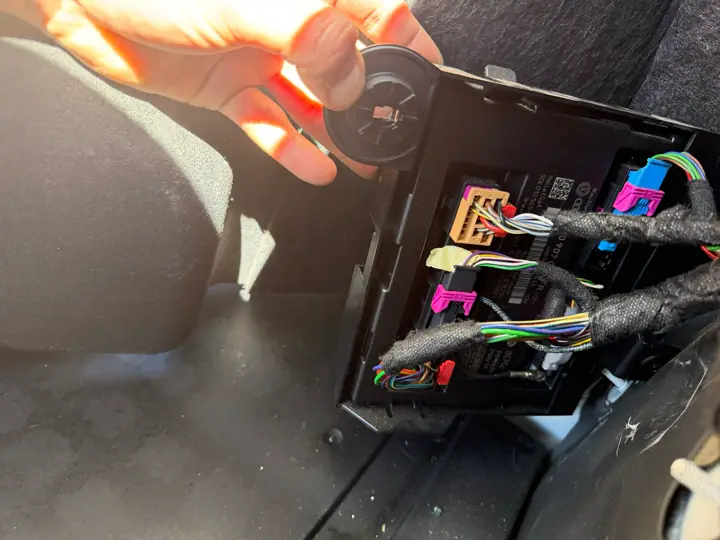
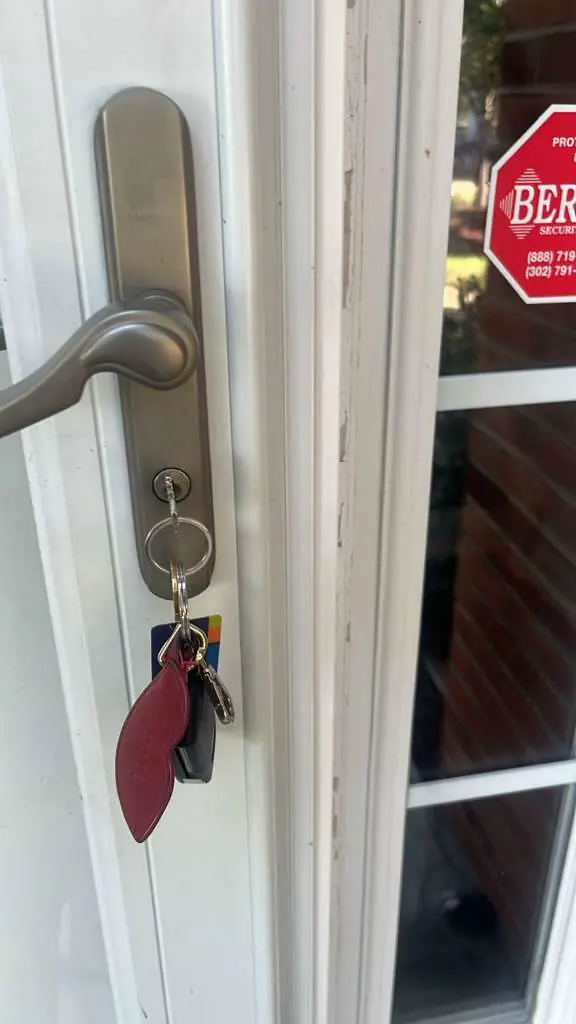
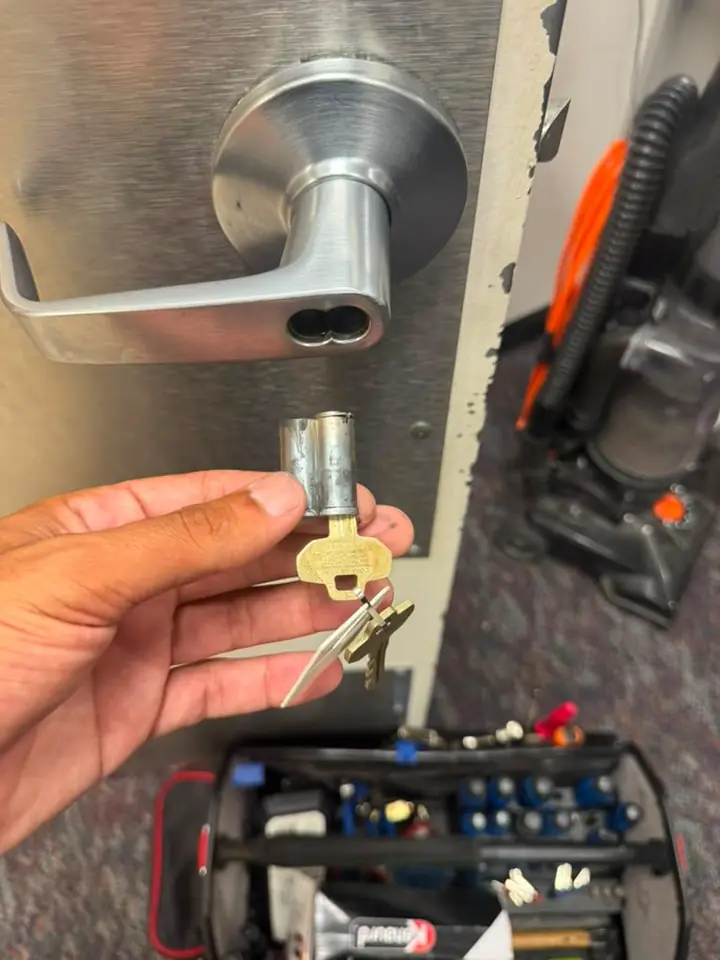
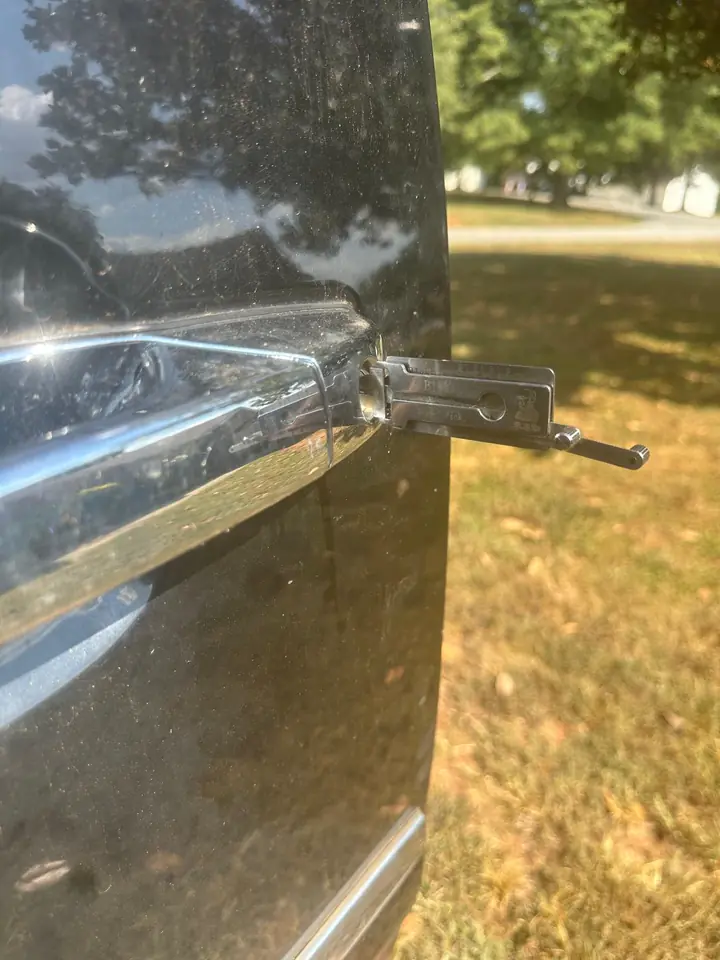
Photographed on our own jobs. No stock images.