
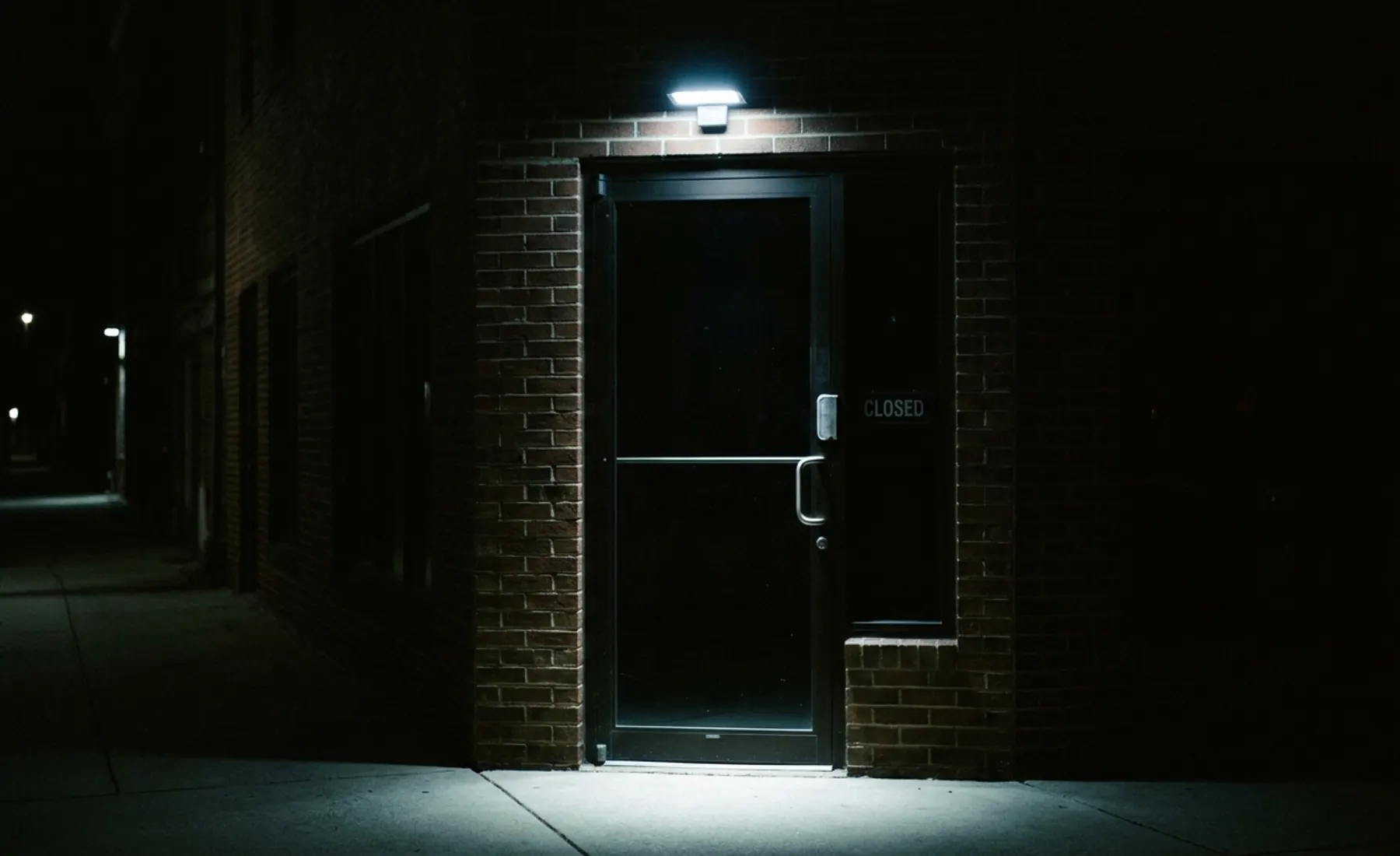
Most business break-ins happen between 10 PM and 5 AM
Your business is most vulnerable when nobody’s there. The locks, keys, and access controls you choose determine whether a would-be intruder faces a 10-second entry or gives up and moves on.
Here’s what actually works for after-hours security in Delaware — based on what we see when businesses call us after a break-in, and what we install to prevent the next one.
The hierarchy of after-hours security (in order of importance)
1. Key control — know who has access
This is the #1 failure point we see. A business has 15 employees, 8 former employees, 3 cleaning crew members, and 2 maintenance contractors who all have (or had) keys. Nobody knows the full list.
What to do:
- Maintain a written log of every key issued
- Use restricted keyways (Schlage Everest, Medeco) that can’t be copied at hardware stores
- Rekey the day someone leaves — not next week
- Consider electronic access for doors with high turnover
2. Hardware grade — commercial locks on commercial doors
We see Delaware businesses with residential-grade hardware on their front doors. A Grade 3 Kwikset deadbolt on a storefront is like putting a screen door on a bank vault.
What commercial doors need:
- Grade 1 deadbolts or mortise locks on all exterior doors
- Reinforced strike plates with 3” screws into the frame studs
- Anti-drill plates on exposed cylinders
- Panic bars on exit doors (required by code for 50+ occupancy)
3. Access scheduling — limit when keys work
If your cleaning crew has all-hours access but only works 6-8 PM, that’s unnecessary exposure. Electronic access control lets you restrict WHEN credentials work, not just WHERE.
Practical examples:
- Cleaning crew codes only active 6-8 PM weekdays
- Delivery access only during business hours
- Management has all-hours access; staff has business-hours-only access
- Alarm auto-arms at a set time regardless of who’s still inside
4. Lighting and visibility — make your building a bad target
Burglars choose targets based on risk. A well-lit building with visible cameras is a harder target than a dark one.
What works:
- Motion-activated lights on all entry points (including back doors and loading docks)
- Interior lights on timers (makes it look occupied)
- No tall bushes or fences that create hiding spots near doors
- Visible camera housings (even if the camera is basic, the housing deters)
5. Alarm and monitoring — the last layer
Alarms don’t prevent entry — they alert you after entry. They’re important, but they’re the last layer, not the first.
What we see after business break-ins in Delaware
After 17 years of responding to break-in lock changes, here are the patterns:
The most common entry method: a key
Not a crowbar. Not a lock pick. A key. Someone who used to work there, used to clean there, or found/stole a key. This is why key control matters more than any other single measure.
The second most common: the back door
Front doors face the street with lighting and foot traffic. Back doors face alleys, parking lots, and dumpster areas with no witnesses. Many businesses invest in a good front door lock and leave the back door with a $20 knob lock. Burglars know this.
The third most common: glass
Storefronts with large glass panels can be entered by breaking the glass and reaching through to the lock. Security film on glass (3M or similar) makes this dramatically harder — the glass cracks but holds together, requiring sustained effort that creates noise and takes time.
Delaware-specific business security context
Wilmington storefronts (Market Street, Trolley Square)
Glass-front retail with aluminum frames. These need:
- Adams Rite deadlatches (designed for narrow aluminum frames)
- Security film on glass panels
- Bottom rails with flush bolts
- Good lighting on the sidewalk side
Route 13 / Route 40 commercial (warehouses, auto shops)
Steel roll-up doors and man-doors. These need:
- Heavy-duty padlocks on hasps (not the $8 Master Lock from Home Depot)
- Shrouded padlock hasps that prevent bolt cutter access
- Grade 1 deadbolts on man-doors
- Motion lighting covering the full perimeter
Office parks (Churchmans Crossing, Concord Pike, Newark)
Multi-suite buildings where individual businesses share common areas. These need:
- Individual suite locks that the building master doesn’t override (or shouldn’t)
- Restricted keyways so departing employees can’t copy keys
- Electronic access on server rooms and sensitive areas
- Clear documentation of who has access to what
Restaurants and bars (Delaware Avenue, Main Street Newark)
High staff turnover, cash on premises, late-night closing. These need:
- Keypad locks where codes change with staff (no physical keys to track)
- A safe bolted to the floor for overnight cash
- Manager-only access to the office and safe area
- Time-delayed locks on safes (prevents robbery under duress)
The after-hours security checklist
Before you leave for the night:
- All exterior doors locked and tested (push on them)
- Back door and loading dock secured
- Safe locked with day’s cash inside
- Alarm armed (if applicable)
- Interior lights on timer
- Exterior lights functioning
- No keys left in obvious spots (desk drawers, under mats)
- Windows closed and latched
When to upgrade vs. when to maintain
Upgrade when:
- An employee leaves and you realize you don’t know who else has keys
- You’ve been broken into (even unsuccessfully — they’ll try again)
- Your insurance requires better hardware for coverage
- You’re expanding and adding doors or employees
Maintain when:
- Locks work fine but haven’t been lubricated in years
- Strike plates are slightly loose
- Codes haven’t been changed in 6+ months
- You haven’t audited your key list recently
Commercial security service in Delaware and nearby PA
Kwikey Locksmith helps Delaware businesses with after-hours security: commercial lock upgrades, master key systems, restricted keyways, access control, and emergency lock changes after break-ins. We work around your business hours so you don’t lose operating time.
Call (302) 551-2550 to discuss your building’s security needs.
Work from our own vans
Photos from jobs our technicians have finished across Delaware and nearby Pennsylvania. Every image below is our own work, taken on site.
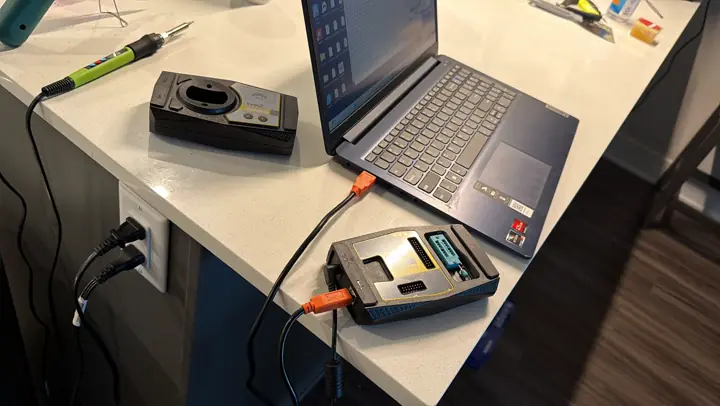
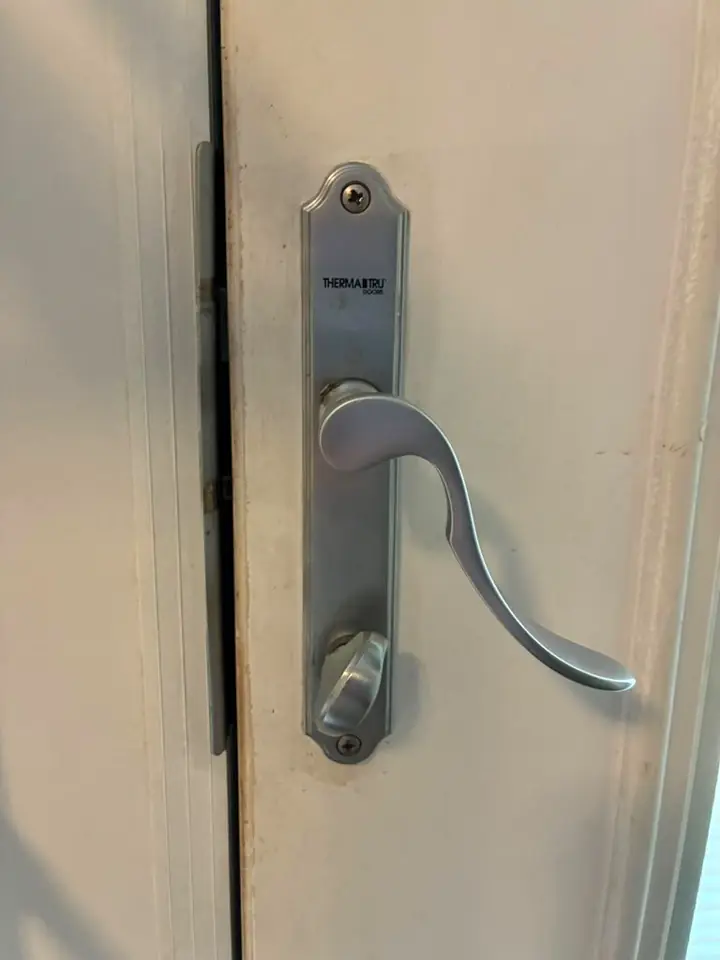
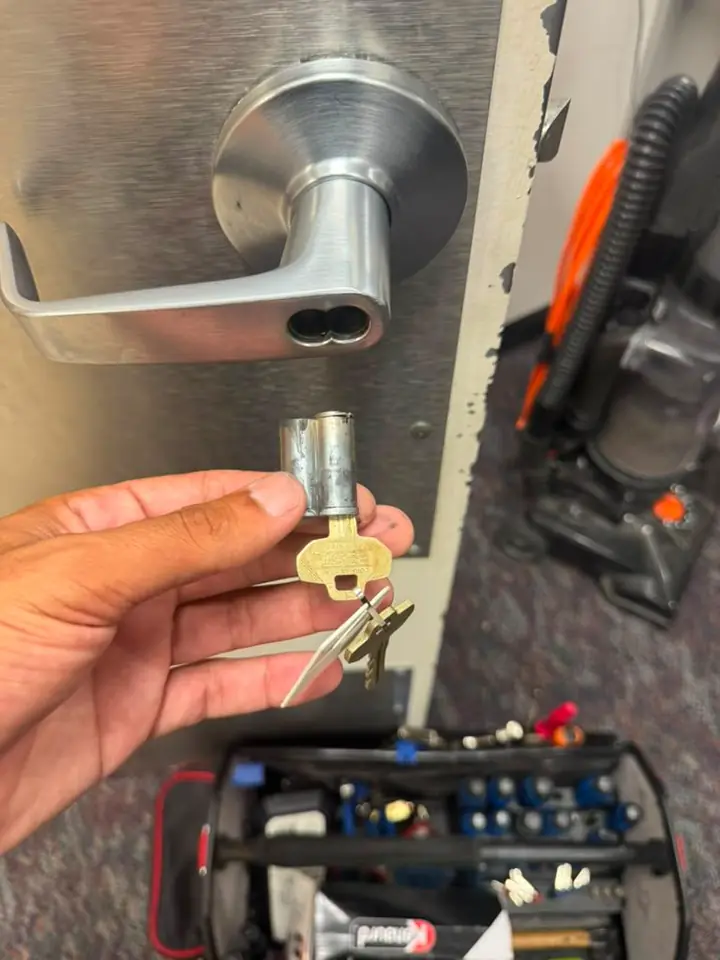
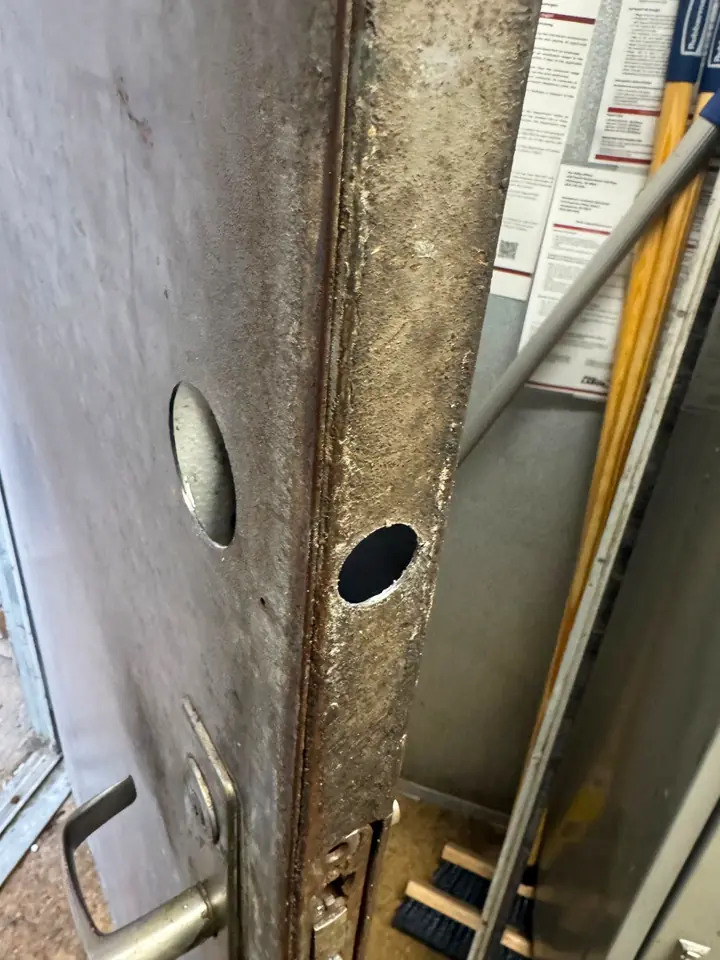
Photographed on our own jobs. No stock images.