
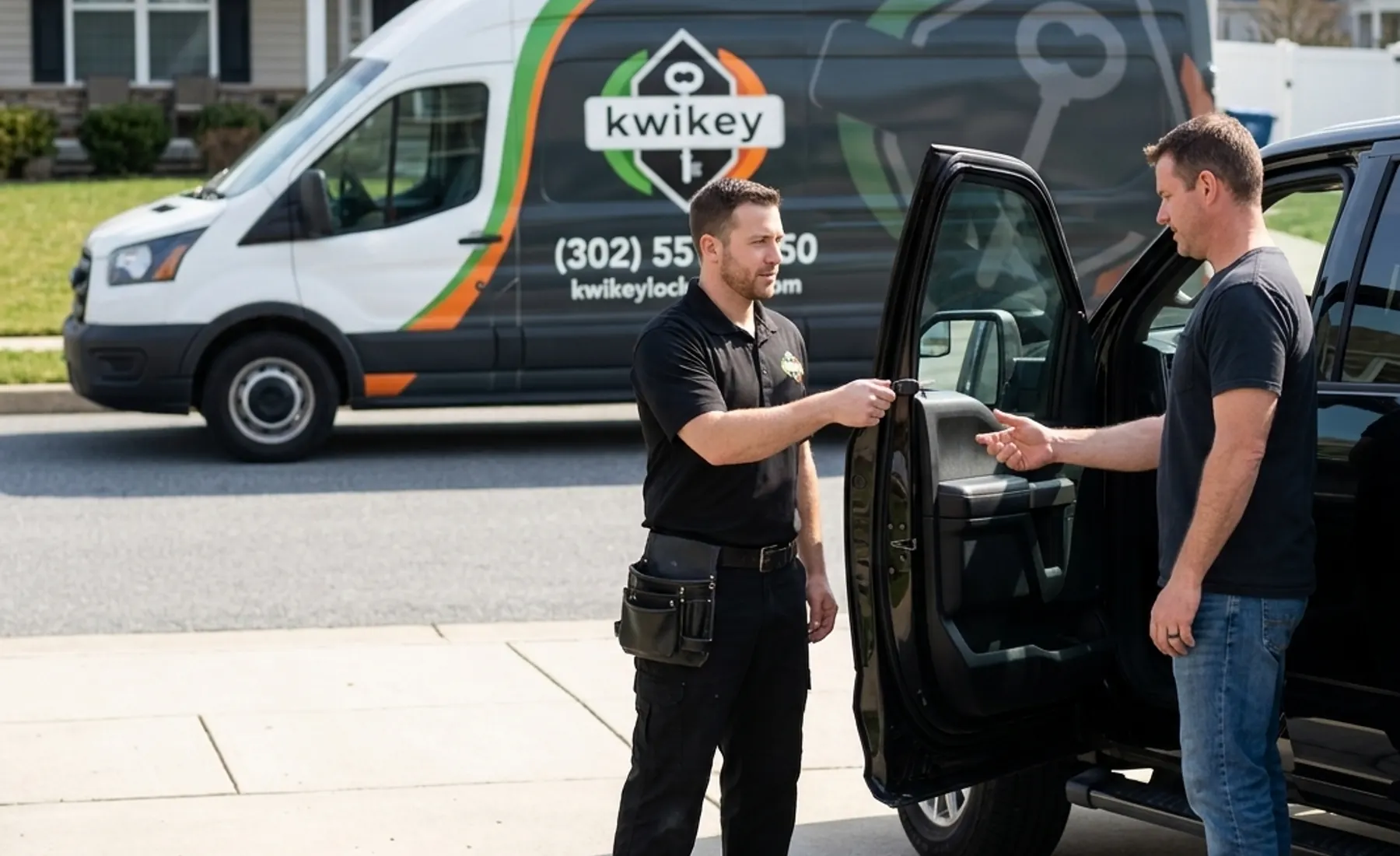
A transponder key has to be cut and programmed
If your car was made after 1995, there is a good chance it uses a transponder key. The chip inside the key sends an authorization signal to the vehicle. A copied blade may turn the lock, but the engine will not start unless the chip is accepted.
How Transponder Keys Work
The start sequence
- You insert your key into the ignition
- The car’s computer sends a radio signal to the key
- The chip in your key responds with a unique code
- If the codes match, the car allows the engine to start
- If they don’t match, the car won’t start even with a correctly cut key
What this means for replacement
This explains why:
- You can’t just copy a transponder key at the hardware store
- A “dumb” copy of your key will unlock doors but won’t start the car
- Vehicle-specific programming tools are often required
- Programming requires specialized equipment
Types of Transponder Keys
How transponder security actually varies by vehicle
Not all transponder systems are equal. Understanding the type your vehicle uses explains why some keys are straightforward to replace and others are complex:
Fixed code transponders. The chip sends the same code every time. Found on older vehicles (late 1990s-early 2000s Ford, GM, some Toyota). These are the simplest to clone — the locksmith reads the code from your existing key and writes it to a new chip. If you have a 2003 Ford F-150 with a red-head PATS key, this is what you have.
Rolling code transponders. The code changes with each use, synchronized between the key and the car’s computer. Common on Honda (2002+), Toyota (2005+), and most modern vehicles. Cloning doesn’t work here — the new key must be programmed into the vehicle’s immobilizer so both sides know the algorithm. This is why you can’t just copy these at a kiosk.
Encrypted transponders. The most secure type. Uses cryptographic challenge-response authentication. Found on newer BMW, Mercedes, VW/Audi (Megamos), and Toyota (DST80). These require manufacturer-level software or advanced locksmith tools to program. Some require online authentication with the manufacturer’s server during programming.
Proximity/smart key systems. Not technically “transponder” in the traditional sense, but they use similar principles with more sophisticated encryption. Your Nissan Intelligent Key, Toyota Smart Key, or Honda Smart Entry all fall here. The car and fob have a continuous encrypted conversation when you’re nearby.
Standard Transponder Key
The original type,looks like a regular key with a thick plastic head containing the chip.
Common on: 1995-2010 vehicles
Remote Head Key (RHK)
Combines the transponder with remote lock/unlock buttons in one unit.
Common on: 2000-present vehicles
Flip Keys
Remote head key with a blade that folds into the fob.
Common on: European vehicles, some Asian manufacturers
Smart Keys / Proximity Fobs
No traditional blade,just a fob that stays in your pocket. The car detects presence and allows push-button start.
Common on: Newer vehicles (2010+), luxury brands earlier
When you need a new transponder key
Why hardware store copies don’t start your car
Here’s what actually happens when you take a transponder key to a hardware store key kiosk:
The machine looks at the physical blade — the metal part — and cuts a copy that matches the grooves. That copy will physically turn your ignition cylinder and unlock your doors. But the car’s computer doesn’t care about the blade shape for starting. It’s listening for the chip.
Think of it like a building with a key lock AND a fingerprint scanner. A copied key gets you through the first door, but without your fingerprint registered in the system, the second door won’t open. The hardware store copied your “key” but can’t copy your “fingerprint” (the transponder chip’s programmed identity).
This is why people bring us keys that “fit but won’t start the car.” The blade is correct. The electronics are missing or unprogrammed.
If a key fits but turns stiffly or not at all, the problem may be a worn key or a worn ignition cylinder rather than the chip. Our guide to diagnosing a key that won't turn in the ignition covers the difference.
The cost math: spare now vs. all-keys-lost later
This is the single most important thing transponder key owners should understand: getting a spare made while you still have a working key is dramatically less expensive than replacing all keys from scratch.
With a working key present: The existing key helps the locksmith program the new one. On many vehicles, the car’s computer uses the recognized key to authorize adding a new one. The process is faster, requires less equipment time, and the key blank itself can sometimes be aftermarket.
All keys lost (no working key): The vehicle’s immobilizer must be accessed directly — sometimes through the OBD port, sometimes by pulling the ECU or instrument cluster. The car needs to be told to forget all old keys and accept new ones. This takes specialized software, more time, and often requires OEM-spec key blanks. On some European vehicles, it requires online authentication with the manufacturer.
The difference in cost between these two scenarios can be substantial. We tell every customer: get a spare made while your current key works. Keep it somewhere safe — not in the car. Think of it as insurance.
All keys are lost
The most expensive scenario. The car must be reprogrammed from scratch.
What’s involved:
- New key cutting
- Programming new transponder chip
- Often requires erasing old keys from system
- May need VIN verification
You need a spare
Often, yes. Your existing key can make programming the new one faster.
What’s involved:
- New key cutting (matched to your lock)
- Programming to work alongside existing keys
The key stopped working
Could be battery (for remote function), chip failure, or programming issue.
Diagnostic steps:
- Replace battery first
- Try manual key function
- If no start, may need reprogramming
Dealer vs. Locksmith: What’s the Difference?
| Feature | Car Dealership | Mobile Locksmith |
|---|---|---|
| Hardware | OEM Only | OEM & Aftermarket |
| Service | In-shop only | On-site mobile service |
| Speed | Often requires appt | Priority response |
| Vehicle support | Brand-specific | Many common platforms |
| Service approach | You go to them | They come to you |
| Equipment | OEM tools | Automotive key tools |
| Result | Key tested at shop | Key tested at vehicle |
- More flexible scheduling than dealership service departments
- Specialized focus on key/lock services
- Direct access to key blank suppliers
- Mobile service reduces facility costs
Transponder key programming methods
On-board programming
Some vehicles allow adding keys using existing keys. Requires 2+ working keys typically.
You can try: Check your owner’s manual for self-programming steps.
Diagnostic programming
Requires connecting to the vehicle’s OBD-II port with programming equipment.
This is what locksmiths use: Specialized tools that communicate with your car’s immobilizer system.
EEPROM programming
For when all keys are lost on certain vehicles. Requires accessing the car’s computer directly.
Most complex method: Only trained automotive key specialists should attempt.
Better planning for transponder key owners
- Get a spare before you need it: Programming with an existing key is faster
- Choose the right service path: Mobile locksmiths can save towing when your vehicle is supported
- Ask about aftermarket blanks: Many work well when the blank, chip, and programming match the vehicle.
- Consider mobile service: No towing needed
Transponder key service in Delaware and nearby Pennsylvania service areas
Kwikey Locksmith programs transponder keys for many common makes and models. Our mobile service comes to you with:
- Diagnostic and programming equipment
- Extensive key blank inventory
- Mobile service in many cases
- Pricing reviewed first
Lost your only transponder key? Call (302) 551-2550 with the year, make, model, VIN, and ownership information so we can review support and timing.
Work from our own vans
Photos from jobs our technicians have finished across Delaware and nearby Pennsylvania. Every image below is our own work, taken on site.
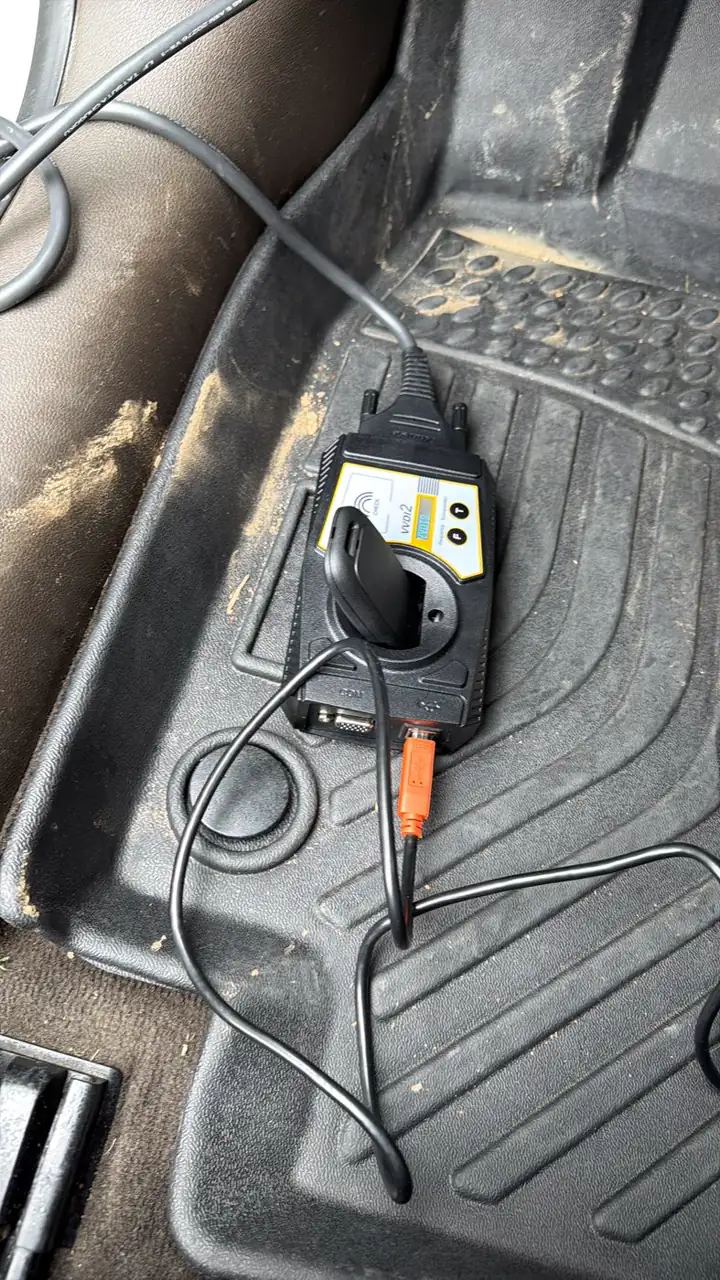
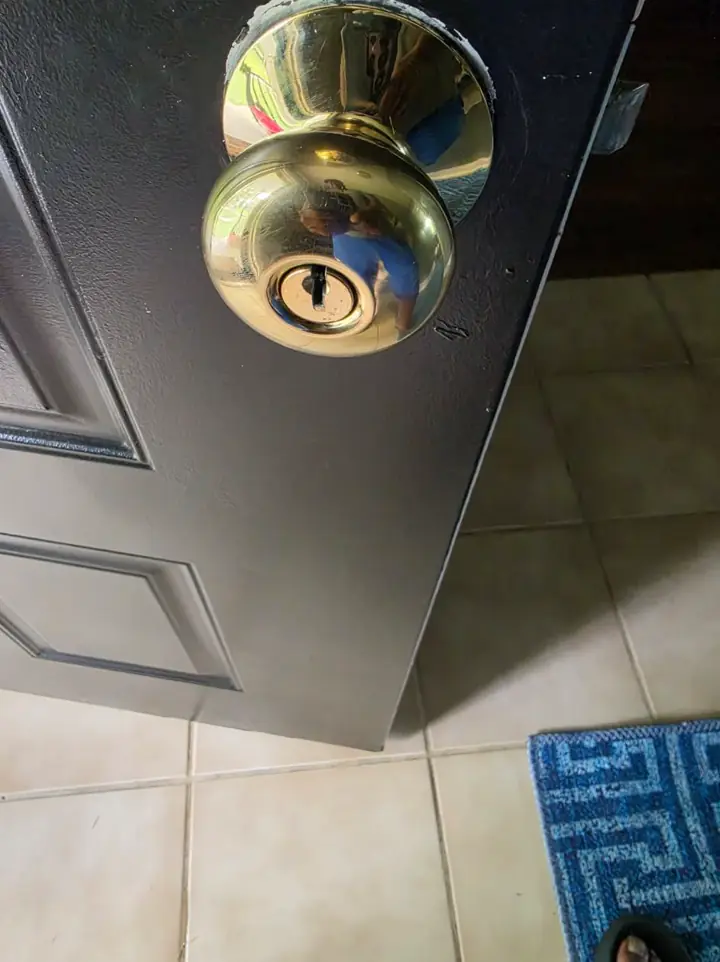
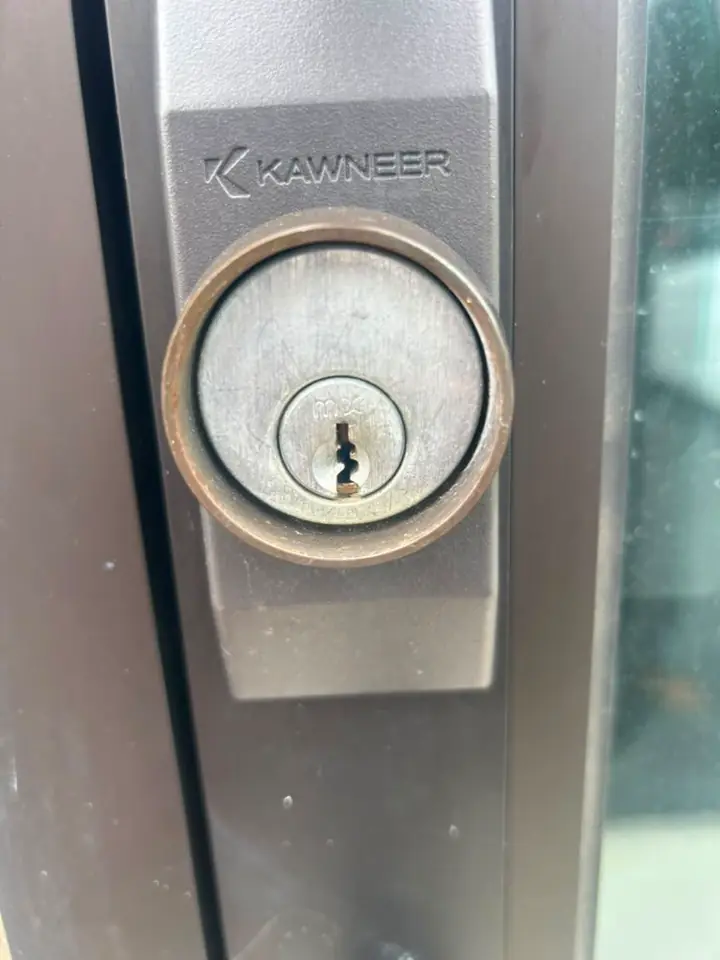
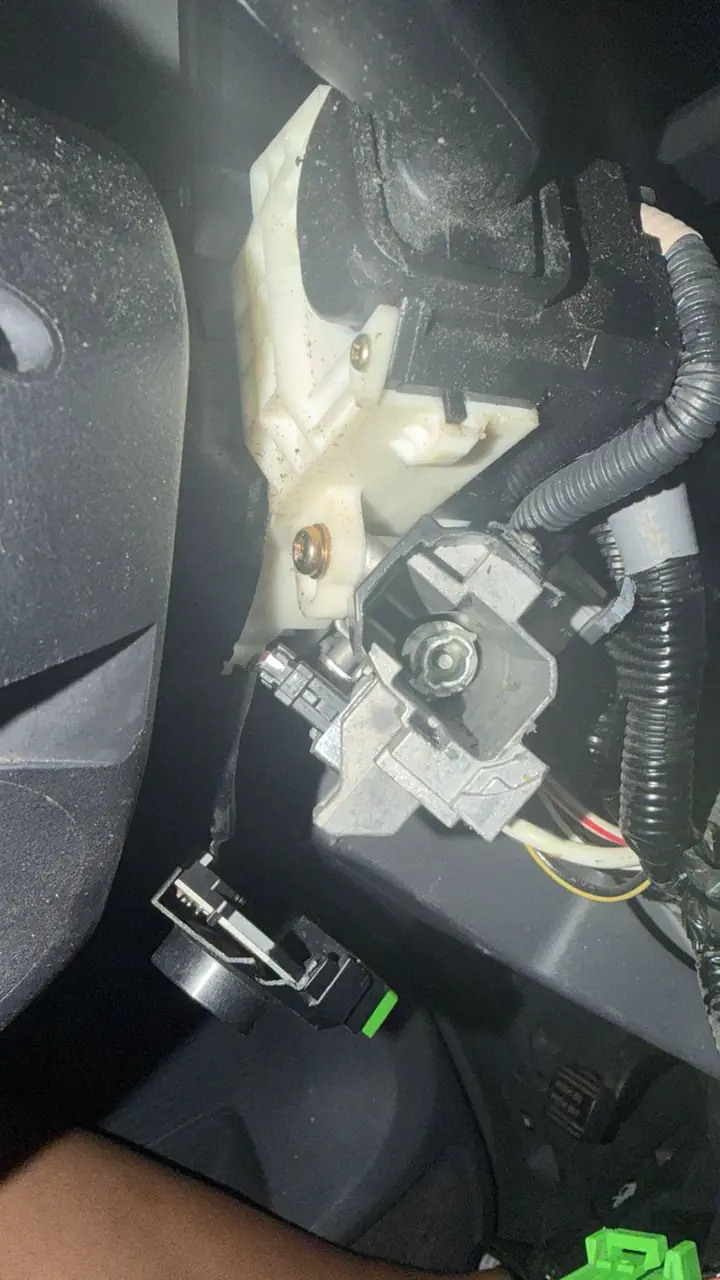
Photographed on our own jobs. No stock images.