
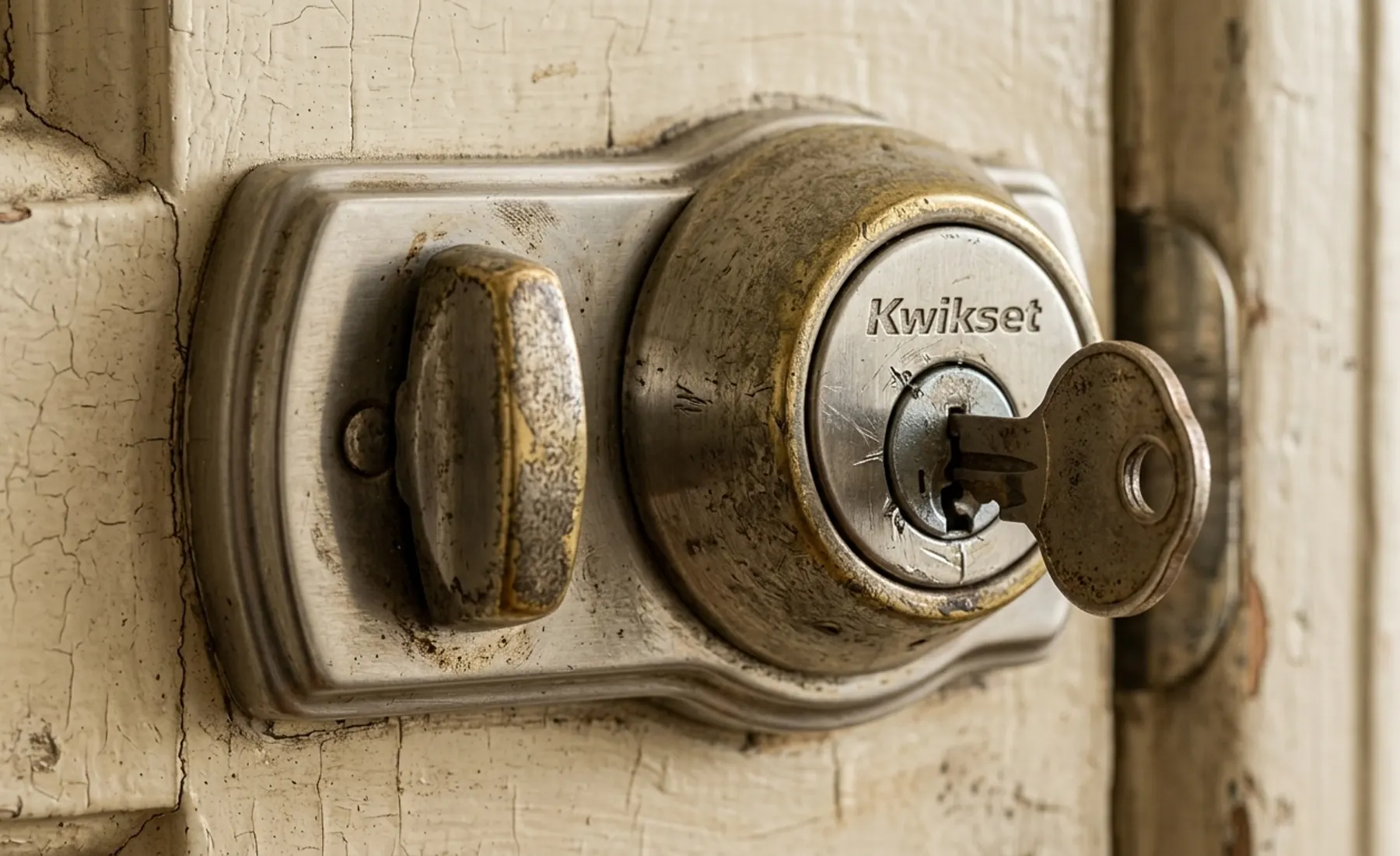
That lock that sticks every time you use it. The deadbolt that refuses to turn smoothly. The doorknob that feels loose.
The right answer depends on what failed: the key, cylinder, latch, strike plate, door alignment, or the lock body itself.
Lock symptoms that often point to repair
The Key Is Hard to Turn
Usually fixable. Causes include:
- Dirt and debris in the cylinder
- Lack of lubrication
- Worn internal pins
- Minor alignment issues
A locksmith can clean, lubricate, and adjust the lock when the hardware is still worth saving.
The Lock Sticks in Cold or Hot Weather
Wood doors expand and contract with temperature changes, causing the bolt to misalign with the strike plate. We can adjust the strike plate or shim the hinges to fix this.
The latch does not catch
Often the strike plate just needs adjustment or the latch mechanism needs cleaning. Usually a quick repair.
The Cylinder Spins Freely
The internal cam or tailpiece is broken. We can typically replace just the cylinder instead of the entire lockset.
Lock symptoms that usually point to replacement
Visible Rust or Corrosion
Once rust begins eating into the mechanism, it’s compromised. Replacement is the safe choice.
The Lock Is Damaged from a Break-In Attempt
Even if it still “works,” a lock that’s been attacked is weakened. Replace it.
It’s an Entry-Level Builder-Grade Lock
Those basic locks installed during construction aren’t worth repairing. They’re designed to be disposable. Upgrade to stronger hardware.
The Lock Is Obsolete
If parts are no longer available, or if the lock is so old that security standards have evolved significantly, replacement makes sense.
Multiple Components Are Failing
If you are repairing multiple failures at once, the cost may exceed a new lock. A clear repair limit helps avoid paying twice.
Repair vs Replacement Check
When deciding between repair and replacement, look at door alignment, cylinder wear, key condition, and how secure the lock needs to be. A misaligned deadbolt or sticky cylinder may only need adjustment. A cracked, loose, or badly worn lock should usually be replaced.
For stronger locks from brands like Schlage, Kwikset, Baldwin, or similar lines, repair may make sense. For worn builder-grade hardware, replacement usually pays off long term.
Locks worth repairing: specific examples from our service area
Not all locks deserve the same treatment. Here’s our honest take on what’s worth saving:
Schlage B60 deadbolts
These are Grade 1 workhorses. If the cylinder is sticky or the bolt isn’t throwing fully, it’s almost always a door alignment issue or dirty pins — not a dead lock. We can clean, lubricate, and adjust a B60 in 15 minutes and it’ll run for another decade. Replacing a $70+ lock because it needs a $15 repair makes no sense.
Old Medeco cylinders
Medeco high-security cylinders are expensive to replace (often $150+ just for the cylinder). If the body is intact and the issue is a worn key or sticky pins, we can service it. These locks were built to last 30+ years. Don’t throw one away because the key is worn — get a fresh key cut to the original code.
Heavy mortise locks in pre-war Wilmington homes
Row homes in the Highlands, Forty Acres, and Trolley Square often have original mortise locks from the 1920s-1940s. These are heavy brass or steel mechanisms built to a standard that doesn’t exist anymore. The lock body itself is often fine — what fails is the cylinder, the spindle, or the trim. We can rebuild these with new cylinders and keep the original hardware functioning. They’re worth saving both for security and for the character of the home.
Baldwin and Emtek residential hardware
High-end residential hardware from Baldwin or Emtek costs $200-$500+ per lockset. If the issue is a sticky latch or a cylinder that needs rekeying, repair is obviously the right call. We see homeowners ready to replace a $400 Baldwin handleset because the latch is misaligned — that’s a 10-minute adjustment, not a replacement.
Locks NOT worth repairing: just replace them
Cheap builder-grade Kwikset (Grade 3)
The basic Kwikset locks that come pre-installed in new construction — the ones with the plastic interior components. When these start failing, the internal parts crack and strip. A new Kwikset costs $15-$25. Paying for a service call to repair a $20 lock doesn’t make financial sense. We’ll swap it for a better lock while we’re there.
Any lock with a plastic interior mechanism
If you take the interior plate off and see plastic gears, plastic tailpieces, or plastic cam mechanisms — that lock was designed to be disposable. When plastic parts strip or crack, there’s nothing to repair. Replace it with something that has metal internals.
Locks with discontinued keyways
Some older locks use keyways that are no longer manufactured. If we can’t get blanks for your lock, rekeying becomes impossible and repair has limited value. Better to upgrade to a current platform where keys and parts are readily available.
Knob locks used as primary security
If your only lock on an exterior door is a knob lock (no deadbolt), don’t repair it — add a deadbolt. A knob lock alone, no matter how well it functions, is not adequate exterior security. We see this constantly in 1960s-era homes in Brookside, Elsmere, and throughout Delco.
Delaware housing context: what we see in the field
Wilmington row homes (1900s-1940s)
Original mortise locks that are 80-100 years old. Heavy, well-made, and often still functional with maintenance. The common failure points are worn cylinders (easy to replace) and loose trim (easy to tighten). These locks are worth repairing — the replacement cost for equivalent quality would be $300-$500 per door, and modern mortise locks don’t have the same build quality.
1960s suburban homes (Elsmere, Brookside, Claymont, Delco)
Worn-out knob locks with no deadbolts. The knob locks are typically so worn that the latch barely catches. Don’t repair these — upgrade. Add a Grade 2 deadbolt and replace the knob lock with a new one. The total cost of upgrading is less than the cost of a break-in.
1990s-2000s developments (Bear, Middletown, Hockessin)
Builder-grade Kwikset that’s now 20-30 years old. The locks still “work” but the cylinders are worn, the finishes are corroded, and the security grade is minimal. These homes are due for a full lock upgrade, not repair. A fresh set of Schlage B60 deadbolts and new lever handles transforms the security profile for a few hundred dollars.
How we explain the repair path
We assess the lock condition first. If repair makes sense, we explain the repair. If replacement is the better long-term path, we explain why.
Our goal is the right repair path, not the most expensive hardware.
Lock repair and replacement in Delaware and nearby Pennsylvania service areas
Kwikey Locksmith provides lock repair and replacement throughout Delaware and nearby Pennsylvania service areas. We diagnose the problem, explain your options, and let you decide.
Call (302) 551-2550 to review the lock problem, door condition, timing, and pricing.
Work from our own vans
Photos from jobs our technicians have finished across Delaware and nearby Pennsylvania. Every image below is our own work, taken on site.
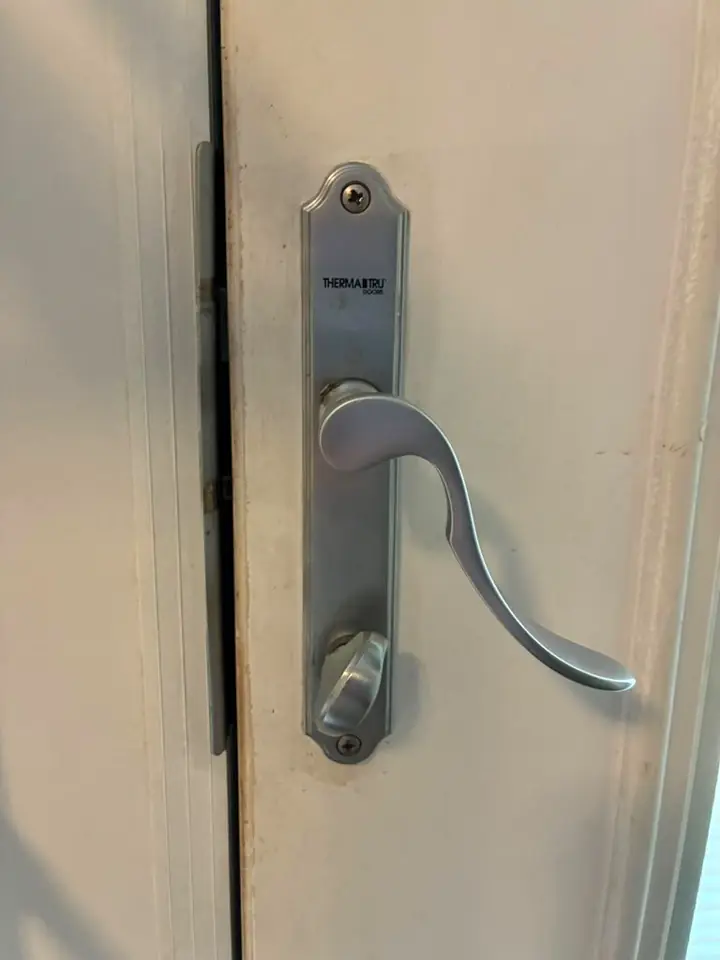
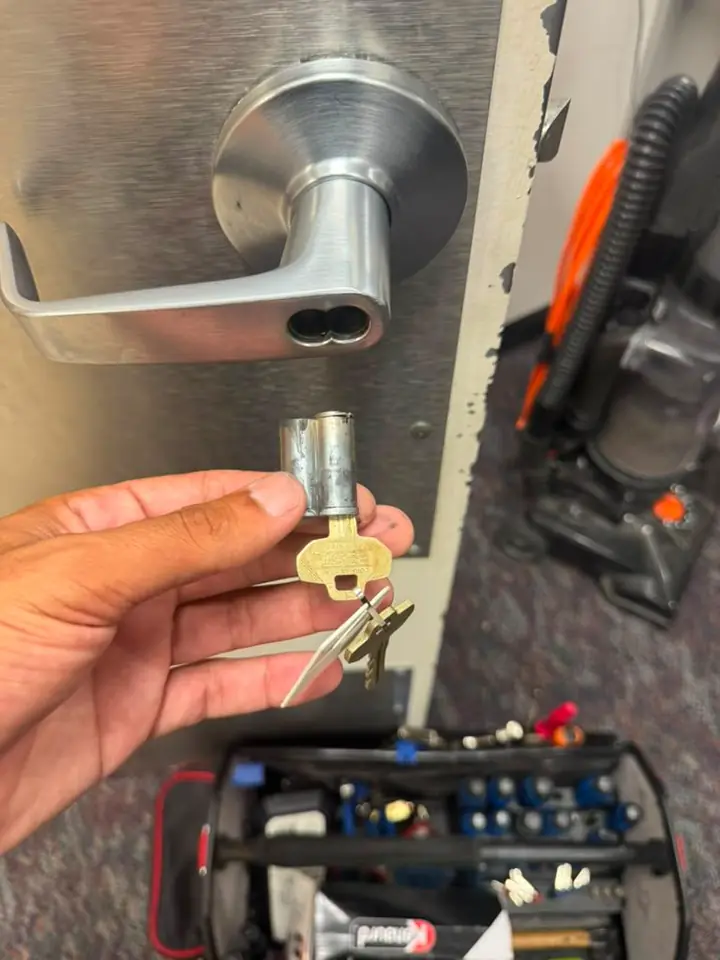
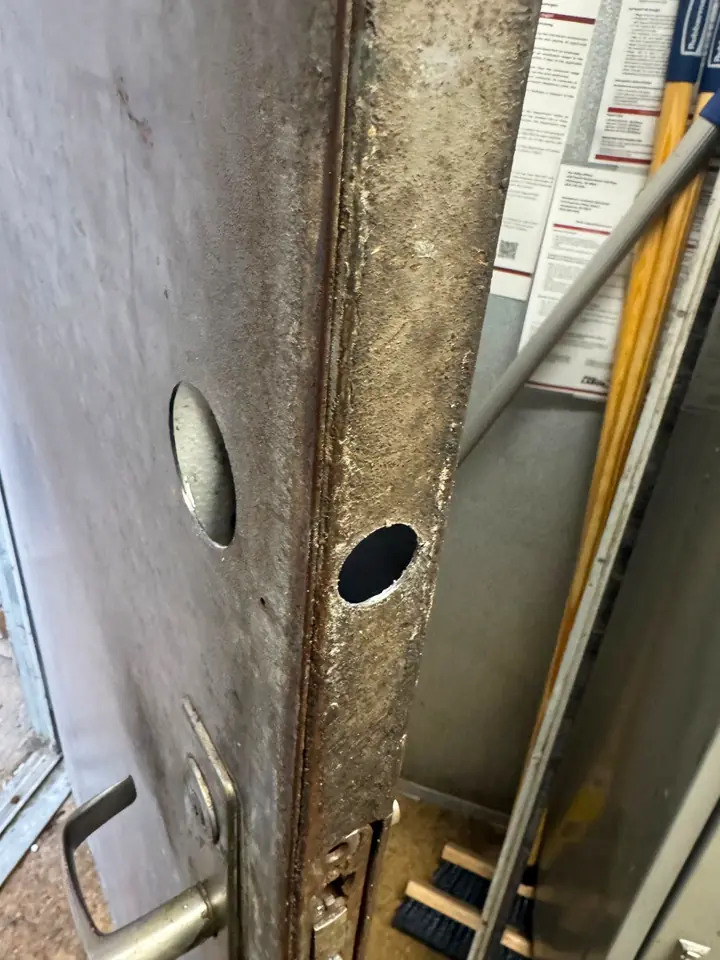
Photographed on our own jobs. No stock images.