
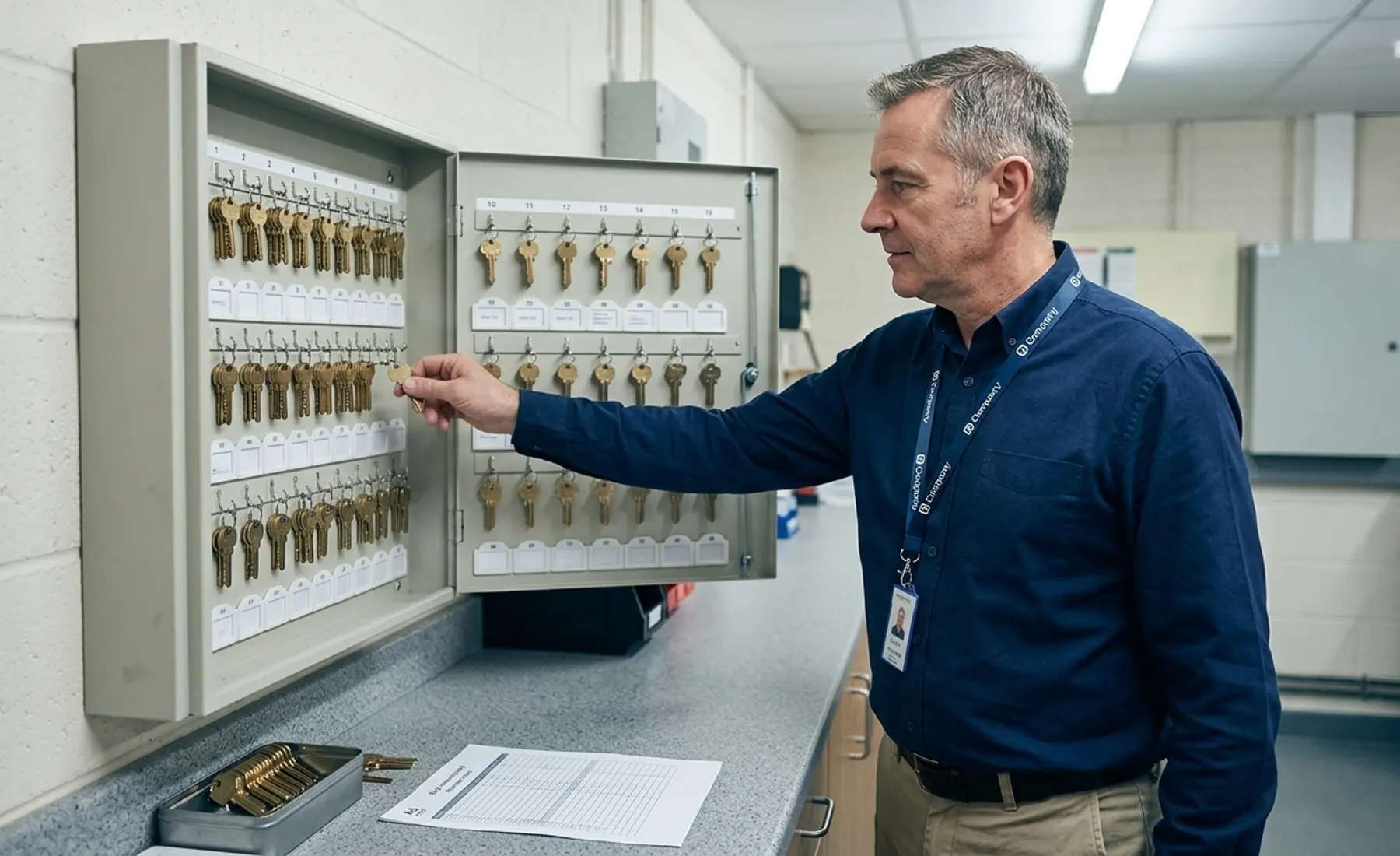
A master key system gives each user the right level of access
A master key system is a planned lock arrangement where different keys open different doors. The goal is simple: staff use only the doors they need, while approved managers can open a wider group of doors.
Level 1 - Change Keys (Individual Keys)
- Open only one specific lock
- Issued to employees, tenants, or department members
Level 2 - Master Key
- Opens all locks in the system
- Held by management or building owners
Level 3 - Grand Master Key (Larger organizations)
- Opens locks across multiple master systems
- Typically held by executives or property management companies
Business problems a master key system solves
Managers carry fewer keys
Instead of carrying dozens of keys, management needs only one master key to access all areas. This is particularly valuable for:
- Property management companies managing multiple buildings
- Retail stores with stock rooms and offices
- Medical offices with multiple exam rooms
- Educational facilities with numerous classrooms
Access can be limited by role
- Easily re-key individual locks without replacing hardware
- Revoke access by changing specific change keys
- Maintain access audit through key sign-out logs
- Restrict sensitive areas to select personnel
Mechanical key control keeps maintenance lower
- Lower hardware costs than electronic access control
- No batteries or electronics to maintain
- Long lifespan with proper maintenance
- Easy employee turnover management
Types of Master Key Systems
Basic Two-Level System
Good for small businesses:
- Individual keys for staff
- One master key for owner/manager
Multi-Level System
Ideal for larger organizations:
- Department-level sub-masters
- Building master
- Grand master for multiple buildings
Maison Key System
Specialized for multi-tenant buildings:
- Each unit has unique key
- Building master for common areas
- Grand master for property management
Plan the system before cutting keys
Review these items first:
- Number of doors: Affects system complexity
- Access levels needed: How many hierarchy levels?
- Future expansion: Plan for growth
- Security requirements: High-security vs. standard
- Budget: Balance features with cost
High-security cylinder options:
- Medeco: Patented key blanks, restricted duplication
- Mul-T-Lock: Interactive technology, pick resistant
- Schlage Primus: Sidebar technology for added protection
Installation Controls the Result
Master key systems require careful design and installation:
What Kwikey provides:
- System design consultation: Built around who needs access to each door
- Key chart documentation: Complete system mapping
- Controlled hardware: From commercial lines that support key control
- Future support: Key additions and system maintenance
- Lockout support: help when an approved user cannot access a door
Installation process:
- Site survey and needs assessment
- System design proposal
- Hardware selection and ordering
- Installed keying
- Key distribution and training
- Ongoing support and maintenance
Master key locksmith service for Delaware businesses
Specific Delaware property scenarios we design for
Multi-unit residential buildings in Wilmington. Downtown Wilmington has dozens of older apartment buildings — 10 to 40 units — where property managers need access to every unit for maintenance and emergencies, but tenants obviously need their own privacy. We design maison key systems where each tenant gets a unique key, maintenance gets a sub-master for common areas and mechanical rooms, and the property manager holds the grand master. When a tenant moves out, we rekey that one unit without touching the rest of the system.
Strip malls along Kirkwood Highway. A typical strip mall has 8-15 units with a shared back hallway, shared dumpster enclosure, and maybe a shared electrical room. The landlord needs access to common areas and all units (for emergencies), but tenants should only enter their own space. We set these up so the landlord’s master works everywhere, each tenant’s key works only on their unit plus the shared back door, and nobody can copy keys without authorization.
Office parks in Newark and Churchmans Crossing. Multi-suite office buildings where a management company oversees the property but each business runs independently. The building manager needs access to mechanical rooms, common restrooms, and the ability to enter any suite for emergencies. Each business gets keys that only work on their suite. We’ve done this for buildings with 30+ suites and it works cleanly when planned correctly.
Restricted vs. standard keyways — and why it matters
A standard keyway (like Schlage SC1 or Kwikset KW1) means anyone can walk into a hardware store and copy the key. For a master key system, that’s a security hole. If a disgruntled employee copies their change key before returning it, your rekey only partially solved the problem.
Restricted keyways solve this. Here’s what we recommend:
- Schlage Everest (S123 or S234 keyway) — the key blank is patented and only available through authorized dealers. A hardware store literally cannot copy it. Good mid-range option for most businesses.
- Medeco M3 or X4 — high-security with patented angles and sidebar technology. Keys can only be cut by authorized Medeco dealers with a signed authorization card. This is what we recommend for businesses with serious key control needs — law offices, medical practices, financial firms.
- Mul-T-Lock Interactive+ — telescopic pin technology with a card-based authorization system. Popular in property management because the authorization cards can be assigned per tenant.
Standard Schlage or Kwikset keyways are fine for basic interior doors where key control isn’t critical. But for exterior doors, server rooms, or any door where unauthorized copies are a real concern, restricted keyways are worth the investment.
Planning for expansion
The biggest mistake we see: a business installs a master key system for their current 8 doors, then adds 4 more doors two years later and discovers the system can’t accommodate them without a complete redesign.
A well-planned system reserves capacity. When we design a system, we build in room for 30-50% more doors than you currently have. The key chart documents which pin combinations are used and which are available. This costs nothing extra upfront but saves thousands later.
If you’re a growing business or a property that might add units, tell us during the planning phase. We’ll structure the system so expansion is a simple addition, not a teardown.
Kwikey Locksmith has installed master key systems throughout the Delaware Valley:
- Corporate offices in Wilmington
- Retail centers in Newark
- Medical facilities in Dover
- Educational institutions across the state
- Multi-family properties in Chester County and beyond
Call (302) 551-2550 to review doors, users, key-control rules, and master key options for your property.
Work from our own vans
Photos from jobs our technicians have finished across Delaware and nearby Pennsylvania. Every image below is our own work, taken on site.
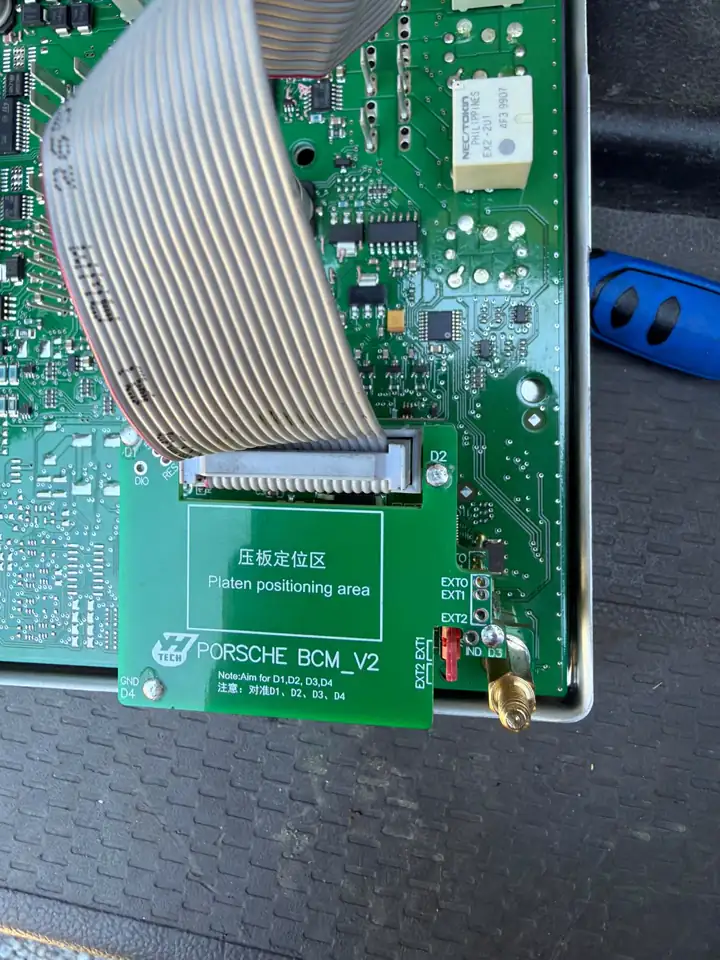
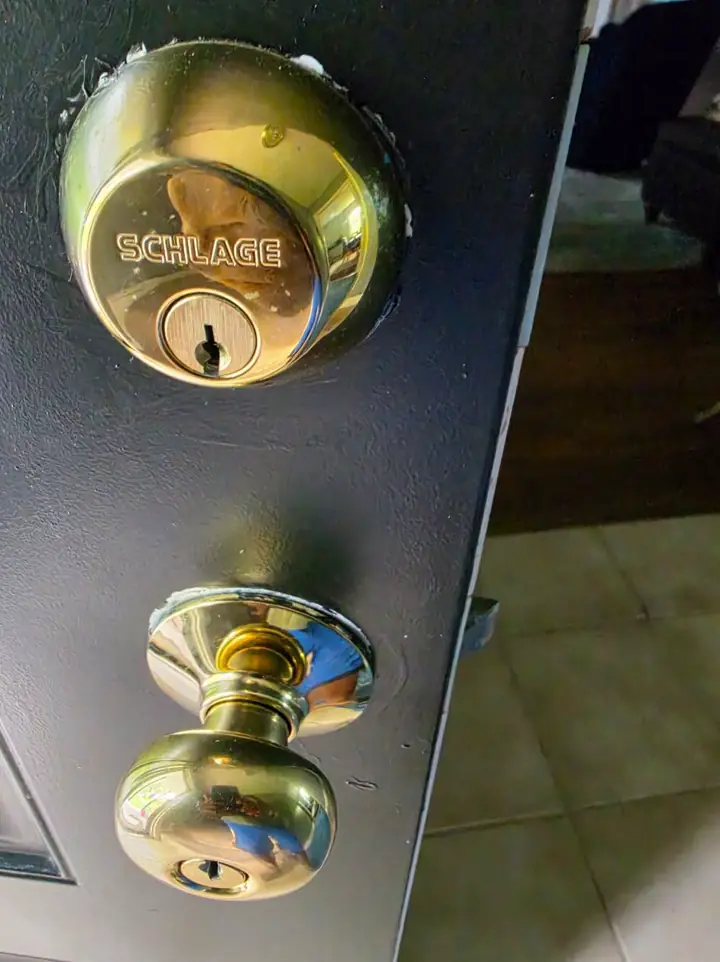
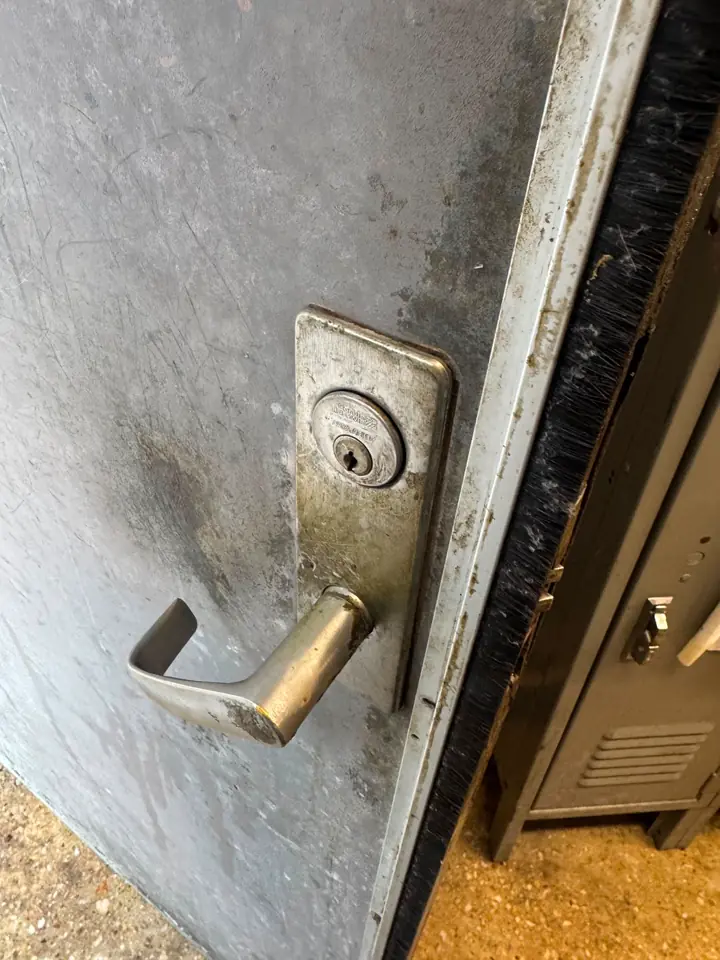
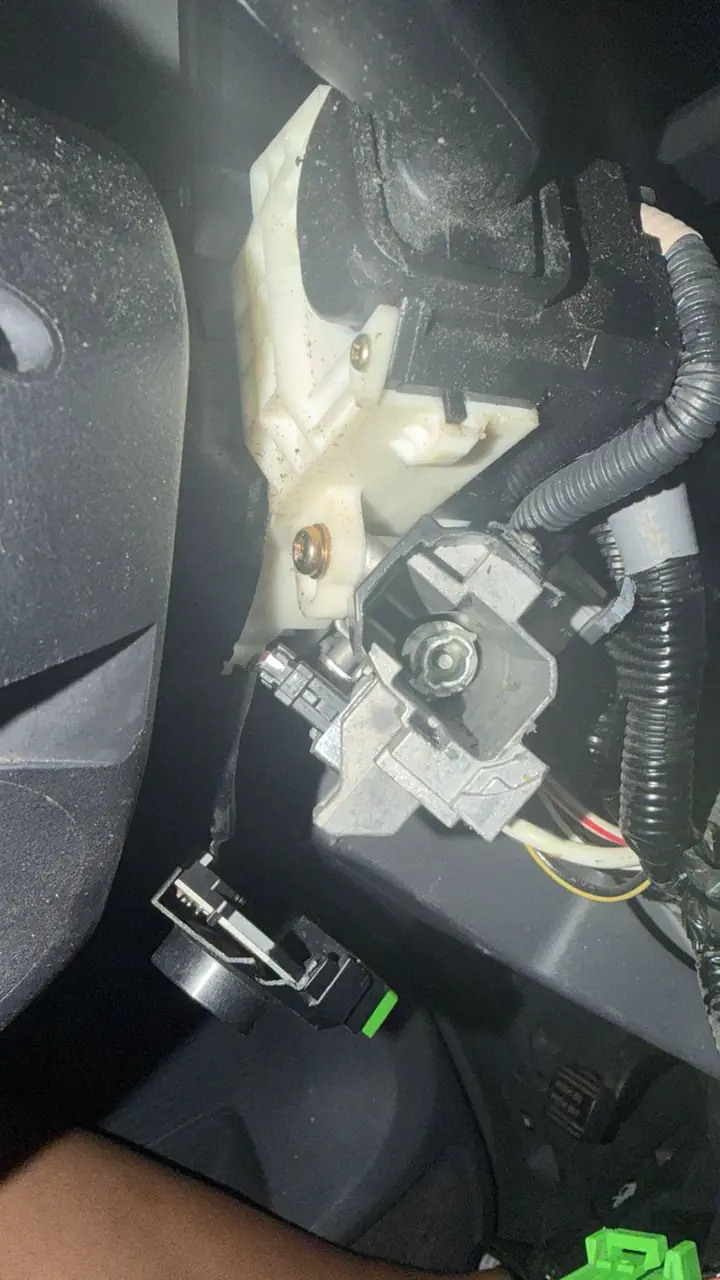
Photographed on our own jobs. No stock images.