
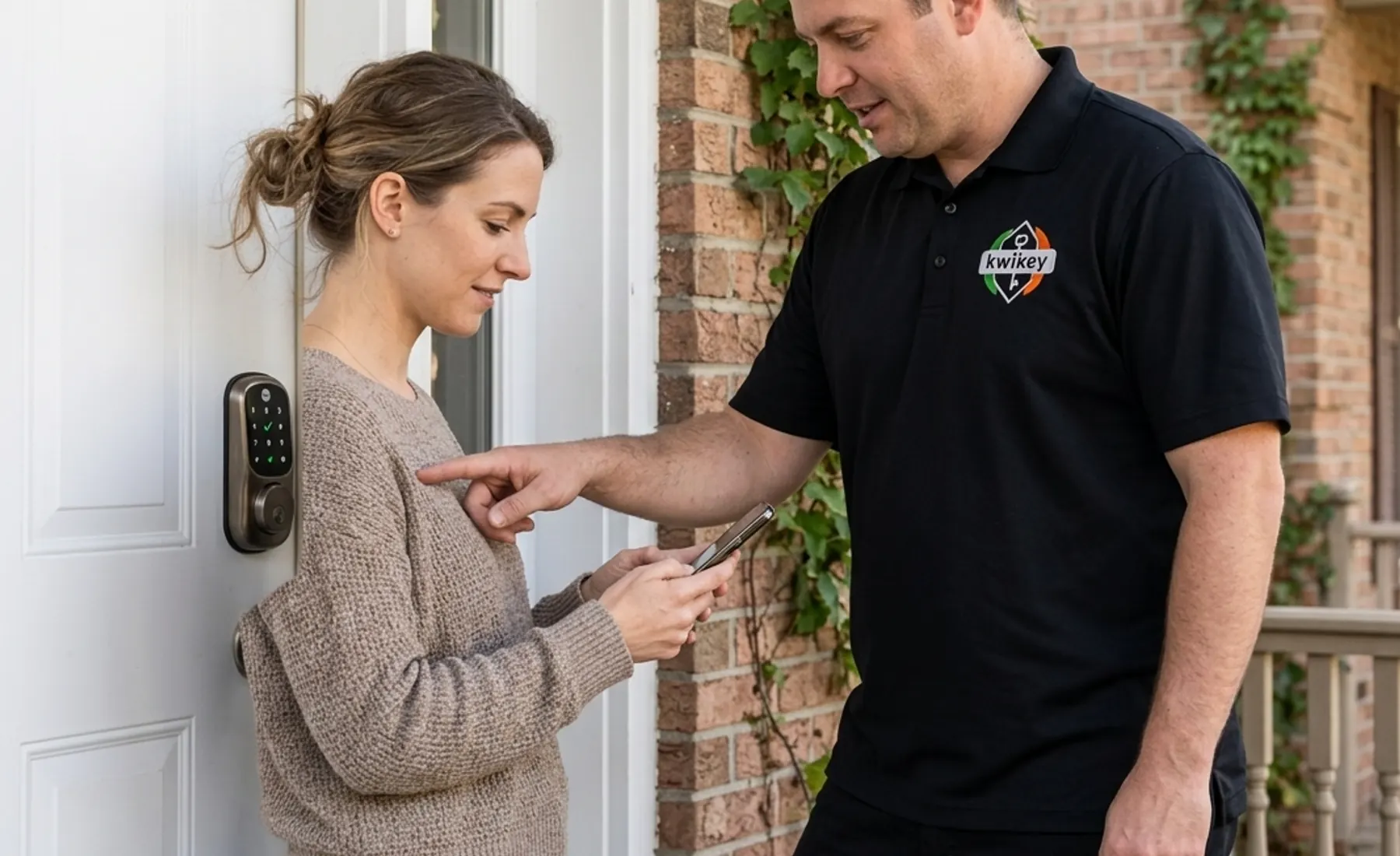
Choose a smart lock that fits your door, routine, and backup plan
The right smart lock for a Delaware home depends on door alignment, Wi-Fi or hub setup, battery access, backup entry, and who needs codes. A good choice should make daily entry easier without creating a weak door or a confusing app setup.
Smart lock features that solve real access problems
Daily access problems smart locks can solve:
- Never worry about lost keys again
- Grant temporary access to guests, dog walkers, or contractors
- Lock status notifications on your phone
- Integration with existing smart home systems
Security features to compare:
- Unique access codes for each family member
- Automatic locking after a set time
- Real-time entry alerts
- Activity logs showing who entered and when
Smart lock features to compare before you buy
Connectivity options
Wi-Fi Smart Locks Fit: homes that need remote access and notifications. Works directly with your home network.
Bluetooth Smart Locks Best-fit option with strong battery life. Requires proximity for operation.
Z-Wave/Zigbee Smart Locks Best for homes already using a smart-home hub. Requires hub compatibility before installation.
Power source
Most smart locks run on AA batteries lasting 6-12 months. Consider models with:
- Low battery alerts
- Physical key backup
- Rechargeable options
Entry methods
Modern smart locks offer multiple ways to enter:
- PIN codes: Great for families with kids
- Fingerprint: Fast access without entering a code
- Smartphone: Remote control when the lock and app support it
- Physical key: Always have a backup
Smart lock examples that fit common Delaware homes
For Existing Deadbolts: August Wi-Fi Smart Lock
- Retrofit design keeps your existing deadbolt
- Works with most US door types
- Strong app and home integration
For Built-In Keypads: Schlage Encode Plus
- Built-in Wi-Fi (no hub needed)
- Apple HomeKit compatible
- Schlage hardware and app support
For Renters: Level Bolt
- Invisible installation inside existing lock
- No exterior modification
- Easy removal when moving
What we install most (and why)
After hundreds of smart lock installations across Delaware and nearby PA, here’s what we actually recommend and install most often:
Schlage Encode Plus — our top pick for most homeowners
Built-in Wi-Fi (no hub or bridge needed), Apple HomeKit compatible, solid Grade 1 deadbolt construction. The keypad is responsive, the app is reliable, and the physical build quality is noticeably better than competitors in the same price range. It’s not cheap — around $280-$330 — but we almost never get callbacks on these. The lock just works, year after year.
Best for: Homeowners who want remote access, guest codes, and don’t want to fuss with a separate hub.
Yale Assure Lock 2 — best mid-range option
Good build quality, modular design (you pick Wi-Fi, Bluetooth, or Z-Wave), and a clean keypad. The Yale app is decent, and the lock fits most standard doors without modification. Around $180-$250 depending on the module. We install a lot of these on rental properties where the owner wants code access for tenants.
Best for: Rental properties, budget-conscious homeowners who still want quality, homes with existing smart-home hubs.
August Wi-Fi Smart Lock — best retrofit
This one mounts on the inside of your existing deadbolt. You keep your exterior hardware unchanged — great for renters or anyone who likes their current look. The app is solid, auto-lock/unlock works well, and installation takes about 10 minutes. The downside: no keypad, so you’re dependent on the app or your physical key.
Best for: Renters, people who want smart features without changing their door’s appearance, anyone who already has a good deadbolt.
What we don’t recommend
Any smart lock under $100 that you find on Amazon with a brand name you’ve never heard of. We’ve installed a few at customers’ request and ended up replacing them within a year. The motors burn out, the Wi-Fi drops constantly, and the apps get abandoned. Spend the money on a known brand.
Delaware-specific door considerations
Older Wilmington doors (pre-1950)
Row homes and older colonials in Wilmington often have non-standard door thicknesses, oversized bore holes from previous lock installations, or mortise lock cutouts that don’t match modern smart lock footprints. Many smart locks are designed for standard 1-3/8” to 1-3/4” doors with a standard 2-1/8” bore hole.
If your door has an old mortise lock pocket, you may need an adapter plate or a different mounting approach. We carry adapter plates for the most common situations, but occasionally an older door needs minor carpentry before a smart lock will sit flush and operate smoothly.
Standard suburban doors (1970s-present)
Good news: if your home was built after 1970 in the suburbs — Hockessin, Pike Creek, Newark, or anywhere in Delco and Chester County — your doors almost certainly have standard prep. Any major smart lock brand will bolt right on. Installation is typically 20-30 minutes per door.
Storm doors and screen doors
A lot of Delaware homes have storm doors. If your storm door has a handle that sits directly over the deadbolt area, some smart lock keypads won’t be accessible without opening the storm door first. We check this during installation and can recommend keypad placement or storm door handle adjustments.
Installation Controls the Result
While many smart locks are DIY-friendly, proper installation helps confirm:
- Proper door alignment for smooth operation
- Optimal security configuration
- Warranty protection
- Training on all features
At Kwikey Locksmith, we install major smart lock brands throughout Delaware and the nearby Pennsylvania service areas. We check door fit, latch alignment, app requirements, backup access, and the features that matter for your household.
Smart lock installation in Delaware and nearby Pennsylvania service areas
Contact Kwikey Locksmith to review your door, smart-home setup, access needs, and installation options. Call during operating hours or use the booking form for planned smart lock service.