
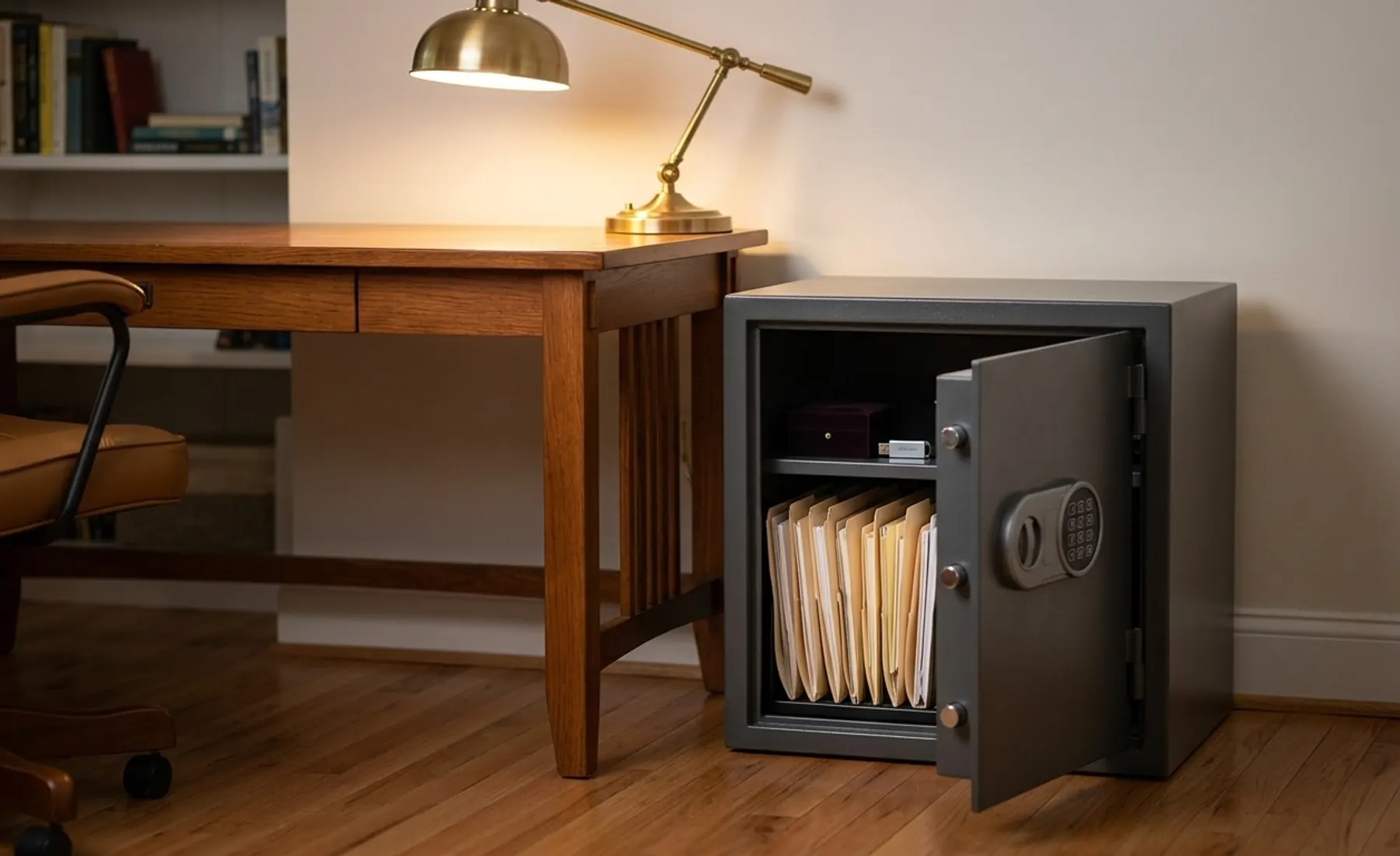
Buy a home safe based on what you need to protect
A safe for passports is different from a safe for jewelry, firearms, backup drives, or cash. Start with the contents, then compare fire rating, theft resistance, lock type, size, and anchoring.
Match the safe to the contents
Different contents need different protection:
Documents and Cash
You need fire protection more than theft resistance. Paper ignites around 450°F, so look for at least a 1-hour fire rating. Water resistance matters too,fire department hoses can destroy what the fire didn’t.
Jewelry and Valuables
Theft resistance is primary. Look for heavier safes with better lock mechanisms and consider bolt-down installation.
Firearms
Gun safes have specific requirements: proper storage away from children, quick access for home defense, and depending on quantity, consideration for weight and humidity control.
Digital Media
Hard drives and USB drives fail at much lower temperatures than paper. If you’re storing backup drives, you need a media-rated safe with lower internal temperatures during fires.
Understanding Fire Ratings
Fire ratings indicate how long the safe maintains a safe internal temperature:
- 30-minute rating: Basic protection for short fires
- 1-hour rating: Good for most home document needs
- 2-hour rating: Better protection, especially for detached structures
The rating matters because house fires can burn hot and long, especially if you are not home when they start.
Safe lock types
Mechanical Dial
Mechanical dial, no batteries needed. Slower to open. Good for safes you do not access frequently.
Electronic Keypad
Fast access, can have multiple codes. Requires batteries (typically lasting 1-2 years). Most popular for home use.
Biometric (Fingerprint)
Fastest access, no codes to remember. More expensive, and fingerprint readers can fail. Good as a backup access method.
Key Lock
Simple but keys can be lost or copied. Usually used as a backup to electronic locks.
Safe size and placement
Safes usually feel smaller inside once folders, jewelry boxes, and documents are added. Consider:
- Documents need more space than you think (folders add up)
- You’ll acquire more valuables over time
- Organizational accessories take space
- Gun safes should have room for your collection to grow
Choose a safe with room for future documents and valuables, not only what you own today.
Anchoring matters for theft resistance
A 50-pound safe can be carried out by two determined thieves. Proper installation includes:
- Bolting to concrete floor or wall studs
- Placing in a concealed spot
- Ensuring the floor can support the weight (some safes exceed 500 pounds)
We recommend anchored installation for any safe over 100 pounds or any firearm safe.
Home safe installation and lockout help
Delaware-specific considerations: flood risk and humidity
If you live in a low-lying area near the Christina River, Brandywine Creek, or anywhere in the flood zones that run through Wilmington, Newport, and parts of New Castle, water-resistant safes aren’t optional — they’re essential. We’ve opened safes after flooding events where everything inside was destroyed because the owner bought a fire-rated safe that had zero water protection.
Fire safes and water safes are not the same thing. A fire-rated safe keeps heat out, but many have gaps or seals that let water pour in during a flood. If you’re in a flood-prone area, look for safes with ETL-verified waterproof ratings (typically rated for submersion up to a certain depth for a certain time). UL 72 fire rating plus ETL water verification is the combination you want.
Even outside flood zones, Delaware’s humidity matters. Basements in our area run humid from April through October. A safe sitting on a basement floor without a dehumidifier rod will develop internal condensation that damages documents, rusts firearms, and corrodes electronics over time.
Brand recommendations based on what we actually see inside homes
We open, service, and install safes regularly. Here’s what we recommend based on real-world performance:
Budget (under $300): SentrySafe. The most common brand we encounter in homes. Their fire/water combination safes (like the SFW series) offer solid document protection for the price. They won’t stop a determined thief with tools and time, but they protect against fire, water, and opportunistic grab-and-go theft. Good for passports, birth certificates, insurance documents.
Mid-range ($500-$1,500): Liberty Safe. Better steel gauge, better fire ratings, better locks. Their Centurion and Colonial lines offer real theft resistance with relocker mechanisms and thicker doors. This is what we recommend for jewelry, firearms, and anything where theft protection matters as much as fire protection.
Serious protection ($1,500+): AMSEC (American Security). This is what we install when the contents are genuinely valuable — significant jewelry collections, large cash holdings, irreplaceable items. AMSEC builds safes with composite walls, multiple relockers, and UL-rated burglary protection (TL-15, TL-30 ratings). These are heavy, expensive, and worth it for the right situation.
What we see go wrong with home safes
After years of safe lockouts and installations, these are the patterns:
Buying too small. This is the number one mistake. People buy a safe for what they own today, then within two years it’s stuffed full and they’re stacking documents on top. Buy one size larger than you think you need. Seriously. You will fill it.
Not bolting it down. A 100-pound safe feels heavy to you. Two guys with a hand truck can have it in a van in 90 seconds. We’ve responded to burglaries where the entire safe was simply carried out. Bolt it to the concrete floor. If it’s on a wood floor, lag bolt through the subfloor into a joist. This single step eliminates the most common safe theft method.
Forgetting the combination. Electronic safes have override keys — keep that key somewhere OTHER than inside the safe. We get lockout calls from people who changed their code and immediately forgot it, or whose batteries died and they lost the override key. Write the combination down and store it in a separate secure location (bank safe deposit box, with your attorney, in a fireproof document bag at a family member’s home).
Putting the safe in an obvious spot. The master bedroom closet is the first place a burglar looks. A basement utility room, a home office closet, or built into a wall behind furniture gives you concealment on top of the safe’s physical security.
Kwikey Locksmith helps homeowners choose, deliver, anchor, and service home safes throughout Delaware and nearby Pennsylvania service areas. We also help with safe lockouts when the combination, keypad, or lock mechanism fails.
Call (302) 551-2550 to review safe size, placement, anchoring, and service options.