
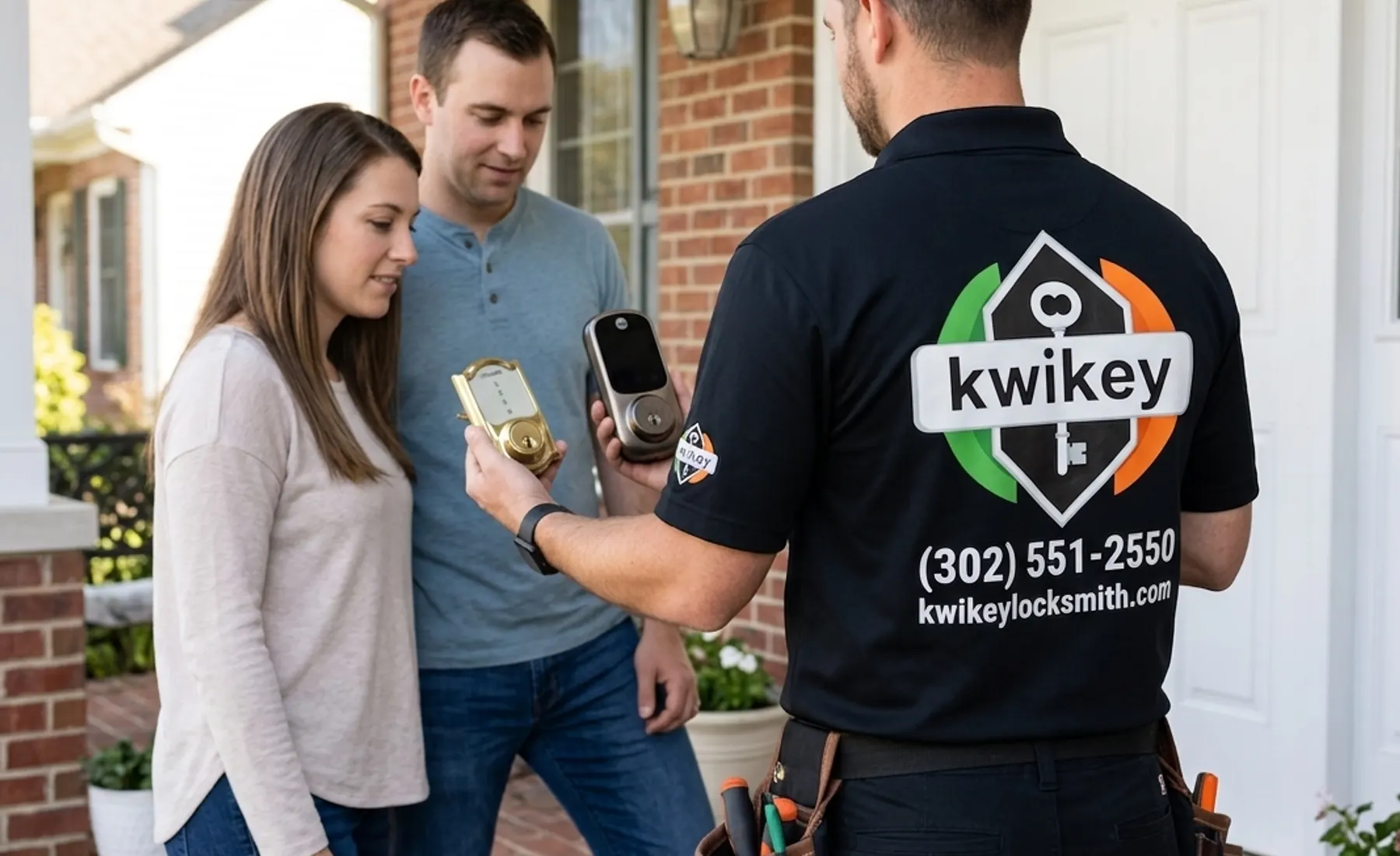
Deadbolt vs. smart lock: the safer choice depends on the problem
Homeowners often ask whether a traditional deadbolt or a smart lock is more secure. The right answer depends on what you need most: forced-entry resistance, key control, remote access, guest codes, battery reliability, or simple daily use.
Traditional deadbolts protect against force when installed well
How deadbolts work
Deadbolts use a solid metal bolt that extends into the door frame, requiring a key to retract. No springs, no automatic latching,just mechanical security.
Deadbolt advantages
- Reliable operation: No batteries or Wi-Fi required
- No app exposure: No digital account to manage
- Broad hardware options: Standard, high-security, and Grade 1 choices
- Simple daily use: Works the same for everyone
- Power-outage proof: Weather and power outages do not affect the lock
Deadbolt tradeoffs
- Keys can be lost or copied
- No remote access or notifications
- Temporary access requires a physical key
- No audit trail of who entered when
Deadbolt Grades To Compare
| Grade | Use Case | Durability |
|---|---|---|
| Grade 1 | Commercial, high-security | 800,000 cycles |
| Grade 2 | Residential exterior | 400,000 cycles |
| Grade 3 | Interior, light use | 200,000 cycles |
Use Grade 1 or Grade 2 hardware for exterior doors.
Smart locks improve access control when configured well
How smart locks work
Smart locks replace or augment the traditional mechanism with electronic access methods: PIN codes, fingerprints, smartphone apps, or voice commands.
Smart lock advantages
- Keyless entry: Good for families, guests, and contractors
- Remote access: Lock or unlock when the model and app support it
- Guest codes: Give temporary access that expires
- Activity logs: See who entered and when
- Smart-home integration: Works with compatible systems
Smart lock tradeoffs
- Requires power: Batteries must be replaced
- Digital account risk: Weak passwords or shared app access can create exposure
- Higher upfront cost: Stronger hardware and connected features cost more
- Setup matters: Codes, app permissions, and auto-lock settings need review
- Technology dependence: Outages can affect some features
Security comparison by real-world risk
Physical attack resistance
Better fit: well-installed deadbolt or smart deadbolt
The physical mechanism of a well-built deadbolt is harder to defeat through force. Smart locks vary,some have weaker physical construction to accommodate electronics.
Key copying and sharing
Better fit: smart lock
Lost your key? Anyone could have it copied. Smart locks let you revoke access codes and review which users still have entry permission.
Picking and bumping resistance
Tie (depends on hardware and setup)
Both high-end deadbolts and smart locks offer anti-pick, anti-bump features. Budget options of either type may be vulnerable.
Hacking Risk
This deserves context:
- Well-built smart locks use AES 128/256 encryption
- Bluetooth vulnerabilities are rare and quickly patched
- The weakest link is usually poor password practices
Real-world risk: Very low for reputable brands with proper configuration.
Here’s what we’d install on our own front door
We get asked this constantly, so here’s a straight answer: Schlage B60N deadbolt on the front door of any home we own. It’s Grade 1, ANSI-rated for 800,000 cycles, has a solid anti-pick cylinder, and costs around $60-80 at retail. It’s not flashy. It doesn’t connect to your phone. But it will outlast the door it’s mounted on, and no one is kicking it in without destroying the frame first.
If we wanted smart features, we’d add a Schlage Encode Plus — same physical security as the B60 platform but with built-in Wi-Fi, Apple HomeKit support, and guest codes. It’s expensive (around $280-$330), but it’s the one smart lock we’ve installed hundreds of times without callbacks.
For a rental property or a side door where we want codes but don’t need the app, a Yale Assure Lock 2 with the keypad module is solid and more affordable.
What we would NOT install on our own door: any smart lock under $150 that relies entirely on Wi-Fi and has no physical key backup. We’ve seen too many of those fail.
What Delaware weather does to locks and smart lock batteries
This area gets the worst of both worlds: humid summers that swell wood doors and cold winters that contract frames and kill batteries. Here’s what that means for your lock choice:
Summer humidity (June-September): Wood doors in older Wilmington homes swell. The door pushes against the frame, and suddenly your deadbolt won’t throw fully or your smart lock motor strains to extend the bolt. This wears out smart lock motors faster and drains batteries. If your door sticks in summer, fix the door — don’t blame the lock.
Winter cold (December-March): Smart lock batteries lose capacity in cold weather. A lock rated for 6 months of battery life on an exterior door might only last 3-4 months through a Delaware winter. Lithium batteries handle cold better than alkaline — use them for any exterior smart lock. Also, metal frames on storm doors contract and can misalign with the lock.
Salt air near the Christina River and Delaware River: Homes in Riverfront, South Wilmington, and anywhere within a mile of the water get accelerated corrosion on exterior hardware. Cheap locks pit and seize faster. If you’re near the river, spend more on the lock — stainless steel or brass construction, not zinc alloy.
What we see fail: honest field observations
After installing and servicing hundreds of locks a year in this area, here’s what actually goes wrong:
- Cheap Wi-Fi smart locks losing connection: The lock works fine for a month, then drops off the network. The owner can’t lock or unlock remotely. Usually it’s a combination of weak Wi-Fi signal at the door and a lock with a poor antenna. Schlage and Yale handle this well. Budget brands from Amazon do not.
- Batteries dying in winter without warning: Some smart locks claim “low battery alerts” but the alert comes 2 days before death, not 2 weeks. In January, when the battery drains faster, people get locked out because their smart lock died overnight.
- Doors that swell and jam the bolt: The smart lock motor tries to throw the bolt, the swollen door resists, the motor burns through batteries in a week. This is a door problem, not a lock problem — but people blame the lock and want it replaced. We fix the door alignment first.
- Auto-lock features locking people out: Someone steps outside to grab a package, the auto-lock engages, and they don’t have their phone. If you use auto-lock, keep a physical key on you or install a keypad.
Use both when the door supports it
Many homeowners are choosing smart deadbolts,devices that maintain the security of a Grade 1 deadbolt while adding smart features.
Top options include:
- Schlage Encode: Built-in WiFi, no hub needed
- August Smart Lock: Retrofit on existing deadbolt
- Yale Assure Lock 2: Multiple connection options
Which lock fits your home?
| If You… | Choose… |
|---|---|
| Have simple needs, tight budget | Traditional deadbolt |
| Rent and can’t modify doors | August retrofit |
| Want remote access + monitoring | Smart lock |
| Have a vacation/rental property | Smart lock w/ codes |
| Distrust all technology | High-security deadbolt |
| Want both security and features | Smart deadbolt combo |
Installation Controls the Result
Whether you choose traditional or smart, proper installation is crucial:
- Door alignment affects lock function
- Strike plate installation prevents kick-ins
- Smart locks need correct WiFi configuration
- Security features must be properly enabled
Kwikey Locksmith installs traditional deadbolts and smart locks throughout Delaware and nearby Pennsylvania service areas. We review door fit, latch alignment, backup access, app setup, and pricing before installation.
Work from our own vans
Photos from jobs our technicians have finished across Delaware and nearby Pennsylvania. Every image below is our own work, taken on site.
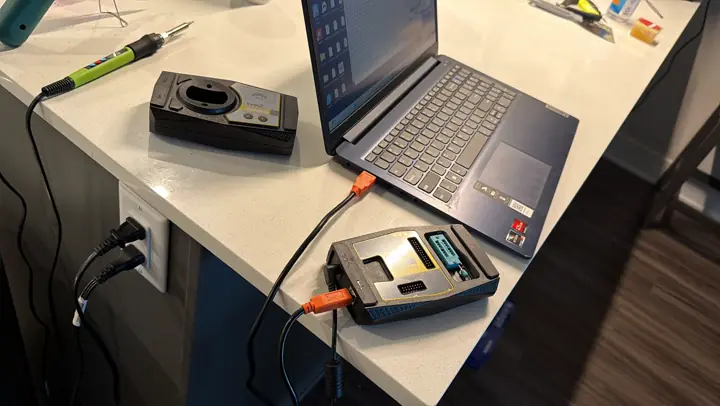
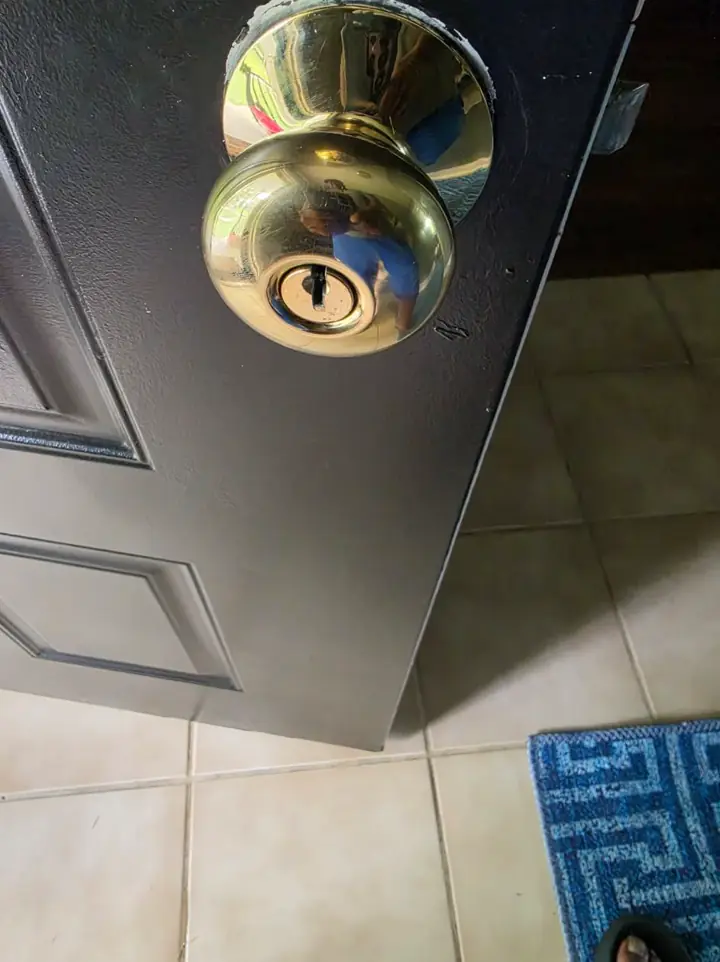
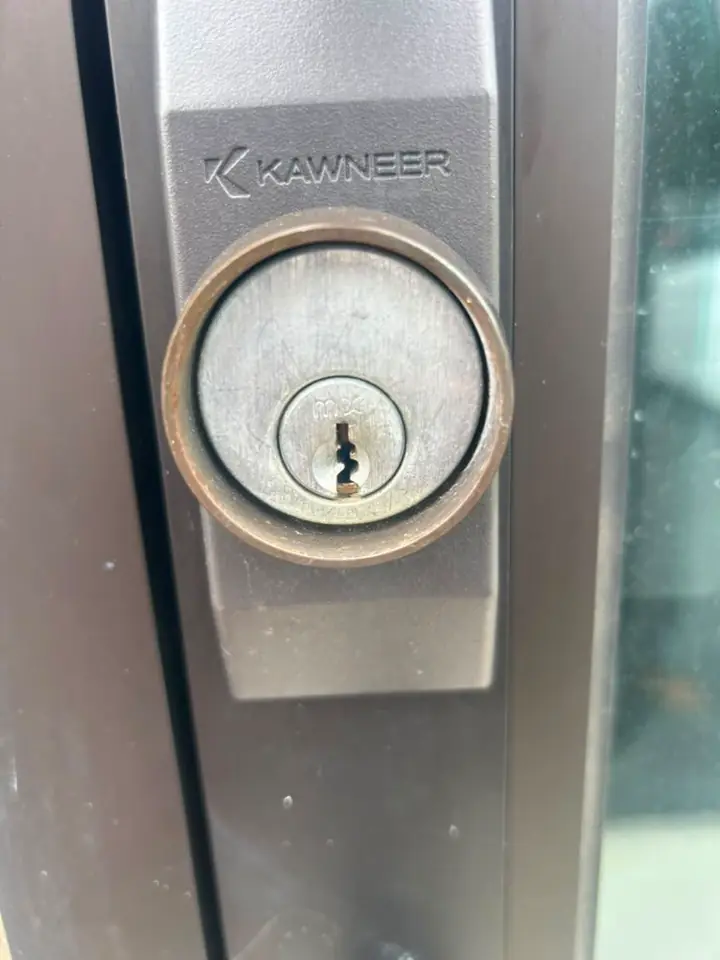
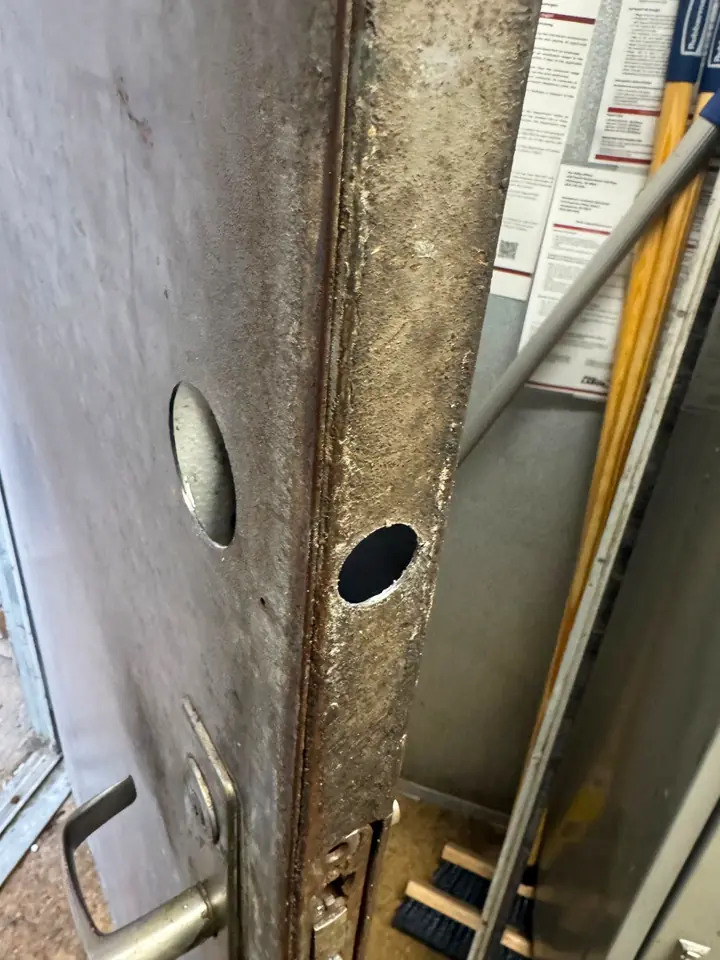
Photographed on our own jobs. No stock images.