
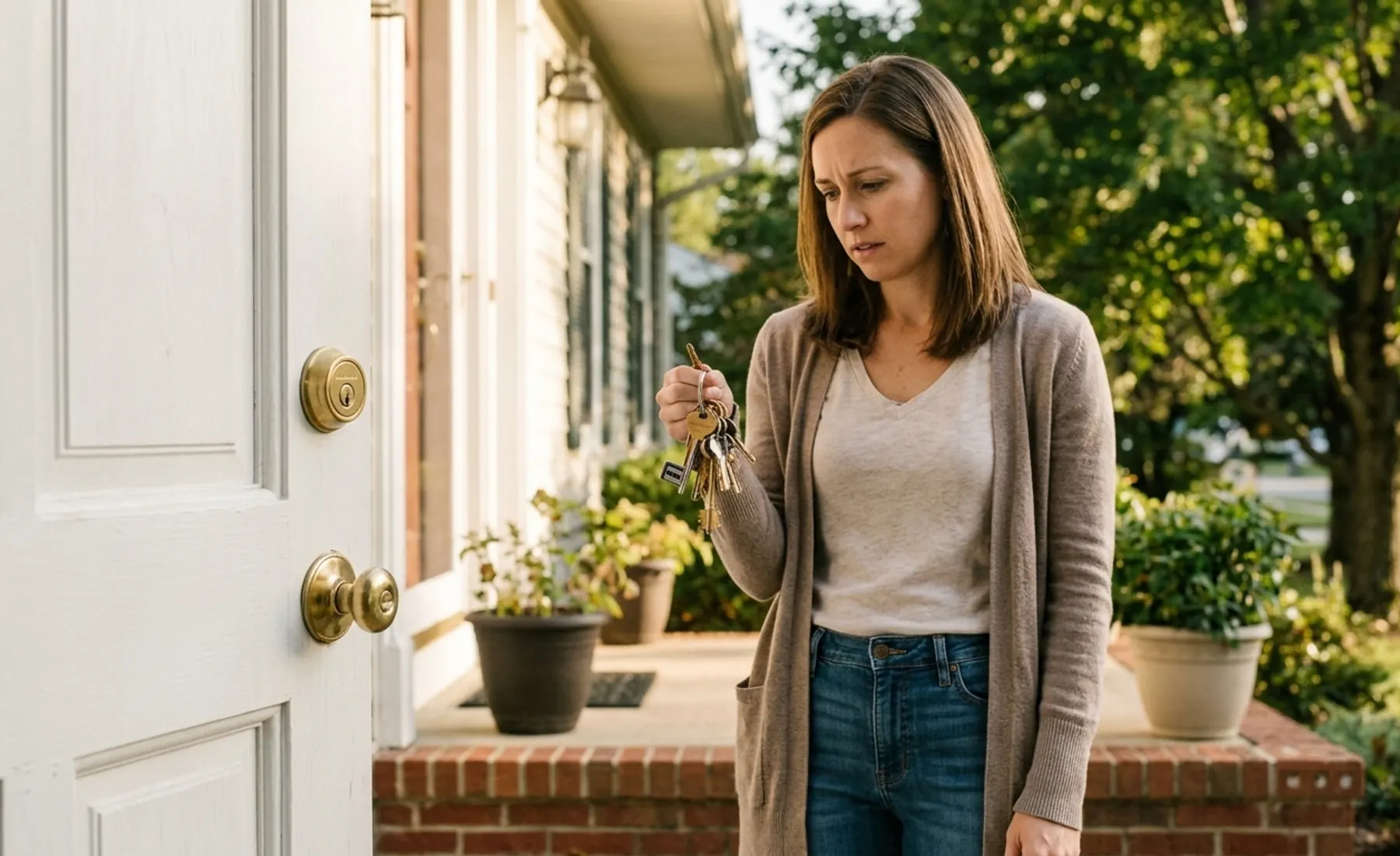
Rekey locks when key control is unclear
Rekeying changes the pins inside your lock so old keys stop working. It is usually the right move when the hardware still works but you cannot trust who has a copy.
10 situations where rekeying protects access
1. You Just Moved Into a New Home
Security concern:
- Previous owners may still have keys
- Keys given to contractors, cleaners, neighbors
- Real estate agents may have copies
- You have no idea how many keys exist
Recommended next step: Rekey within the first week of moving in so every exterior door starts with known key control.
2. You Lost Your Keys (Or They Were Stolen)
Security concern:
- Lost keys can end up in anyone’s hands
- Stolen keys mean someone specifically has access
- Your address may be identifiable (if attached to wallet, etc.)
- Insurance may not cover break-ins if keys were lost
Recommended next step: Rekey immediately, especially if ID, mail, or anything with your address was lost with the keys.
3. An Employee or Roommate Left on Bad Terms
Security concern:
- Disgruntled individuals pose security risks
- They may have made copies
- Keys may be shared with others you don’t know
- Clear key control for remaining occupants
Recommended next step: Rekey promptly after the person leaves, then document who receives the new keys.
4. Your Contractor or Service Provider Had a Key
Security concern:
- Keys may have been copied for convenience
- Multiple workers may have had access
- Companies have employee turnover
- Key control standards vary widely
Recommended next step: Rekey after major renovation, cleaning, maintenance, or property management changes.
5. A Break-In Occurred (Even Unsuccessful)
Security concern:
- May indicate someone is targeting your property
- Lock damage may not be visible
- Psychology: criminals often return
- Police generally recommend rekeying
Recommended next step: Rekey all entry points and consider higher-security cylinders if the door or lock was targeted.
6. Your Locks Are Showing Age
Signs of Lock Wear:
- Difficulty turning key
- Key sticking or catching
- Visible rust or corrosion
- Loose or wobbly hardware
- Deadbolt not extending fully
Recommended next step: Rekey if the hardware is sound. Replace the lock if the cylinder, latch, or door hardware is worn out.
7. You Don’t Know Who Has Keys
Common scenarios:
- Inherited property
- Long-term rental ownership
- Keys given out over many years
- Previous security breaches
Recommended next step: Rekey every exterior lock that may still accept an old copy.
8. Going Through a Divorce or Separation
Security concern:
- Legal protection during disputes
- Emotional situations can escalate
- Protection of personal property
- Clear key control for all parties
Recommended next step: Rekey as soon as possible and confirm legal requirements with your attorney when needed.
9. You Want All Locks on One Key
Access concern:
- Convenience - one key for everything
- Easier to manage spare keys
- Less bulk on keychain
- Cleaner key control
Recommended next step: Rekey compatible locks to one key so daily access is easier to manage.
10. It’s Been More Than 5-7 Years
Security concern:
- Keys accumulate over time
- Wear affects lock security
- Technology and standards evolve
- Regular maintenance is prudent
Recommended next step: Review key control every few years, especially for rentals, shared homes, and businesses with staff turnover.
Delaware-specific scenarios we see constantly
Student housing turnover in Newark
University of Delaware rentals cycle tenants every year — sometimes every semester. Landlords who don’t rekey between tenants are creating a situation where dozens of former students (and their friends, and their sublettors) have working keys to the same property. If you’re a student moving into a Newark rental and the landlord says “we don’t rekey between tenants,” that’s a problem. Push back or call us directly.
Wilmington row home sales with years of key history
Row homes in Trolley Square, the Highlands, and 40 Acres change hands frequently. We’ve rekeyed homes where the seller admitted 5-8 people had keys — and that’s just the ones they remembered. Add in old landlords, maintenance workers, and neighbors who had spares, and you’re looking at a dozen potential key holders. The shared-wall construction of row homes makes this worse: if someone has your key and knows your schedule, they have easy concealed access from the shared alley or rear.
Seasonal and vacation properties near the coast
Homes in Rehoboth, Lewes, and Bethany that sit empty for months are prime targets. If you rent your beach property during summer and don’t rekey in fall, every renter (and their guests) still has access during the quiet months when no one’s watching. We recommend rekeying beach properties at least once a year, ideally at the end of rental season.
What Kwikey sees most often: the real top 3 reasons people call for rekeying
After years of rekeying locks in Delaware and nearby PA, here are the actual top reasons — not the theoretical ones:
- Just moved in. This is easily 60% of our rekeying calls. People close on a house and want fresh key control before they unpack. Smart move.
- Relationship change. Breakups, divorces, roommates leaving badly. When trust is gone, rekeying is the fastest way to restore peace of mind. We don’t ask questions — we just make sure the old keys stop working.
- Lost keys with address exposure. Someone loses their keys along with their wallet or mail. Now a stranger potentially has their key AND their address. These calls come with urgency, and we treat them that way.
Honorable mention: landlords between tenants. The good landlords rekey every time. The ones who don’t are the reason their tenants call us independently.
Rekeying vs. replacing locks
Rekey when:
- Hardware is in good condition
- You want a faster way to reset access
- Quick turnaround is needed
- Current locks meet your security needs
Replace when:
- Locks are damaged or worn
- You want to upgrade security grade
- Aesthetic update is desired
- Smart lock conversion planned
Rekey locksmith service in Delaware and nearby Pennsylvania
- Mobile rekeying throughout Delaware and nearby PA suburbs
- Price and work plan reviewed first - know what to expect before we start
- On-site service - locks can usually be rekeyed at your property
- One-key options - compatible locks can often be keyed alike
- High-security options - if upgrade is needed
- Background-verified and insured - field work handled with clear accountability
Do not wait until a missing key becomes an access problem. Restore key control with rekeying from Kwikey Locksmith.